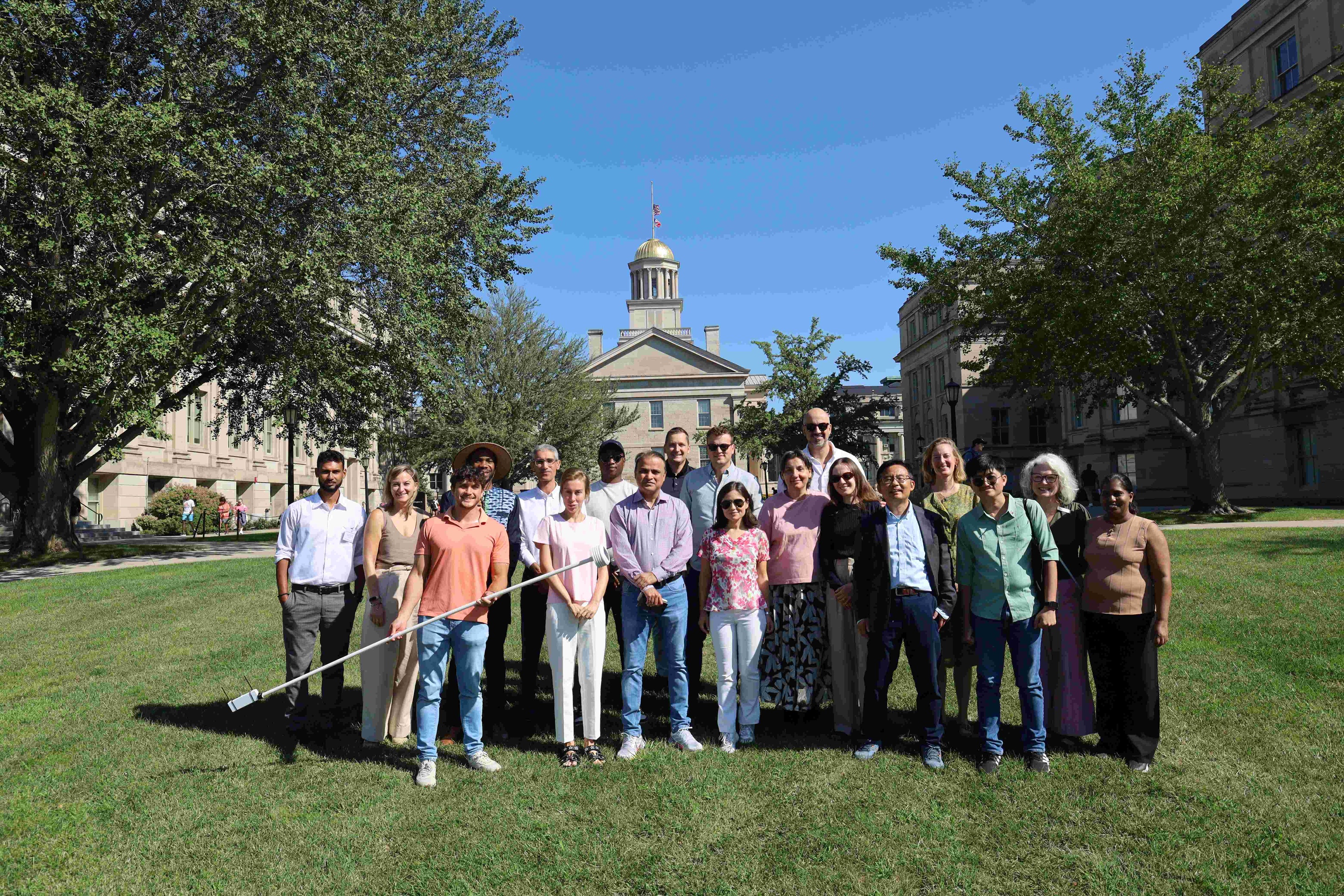
Leaders from across the globe visited the University of Iowa College of Engineering as a stop on a tour of U.S. agriculture and technology innovation that is supporting farmers.
The visit was part of the U.S. Department of State's International Visitor Leadership Program, which brings emerging and established leaders to the United States to exchange ideas and learn about areas of innovation. The group included 22 professionals from more than 15 countries including, Germany, Kenya, and Sri Lanka.
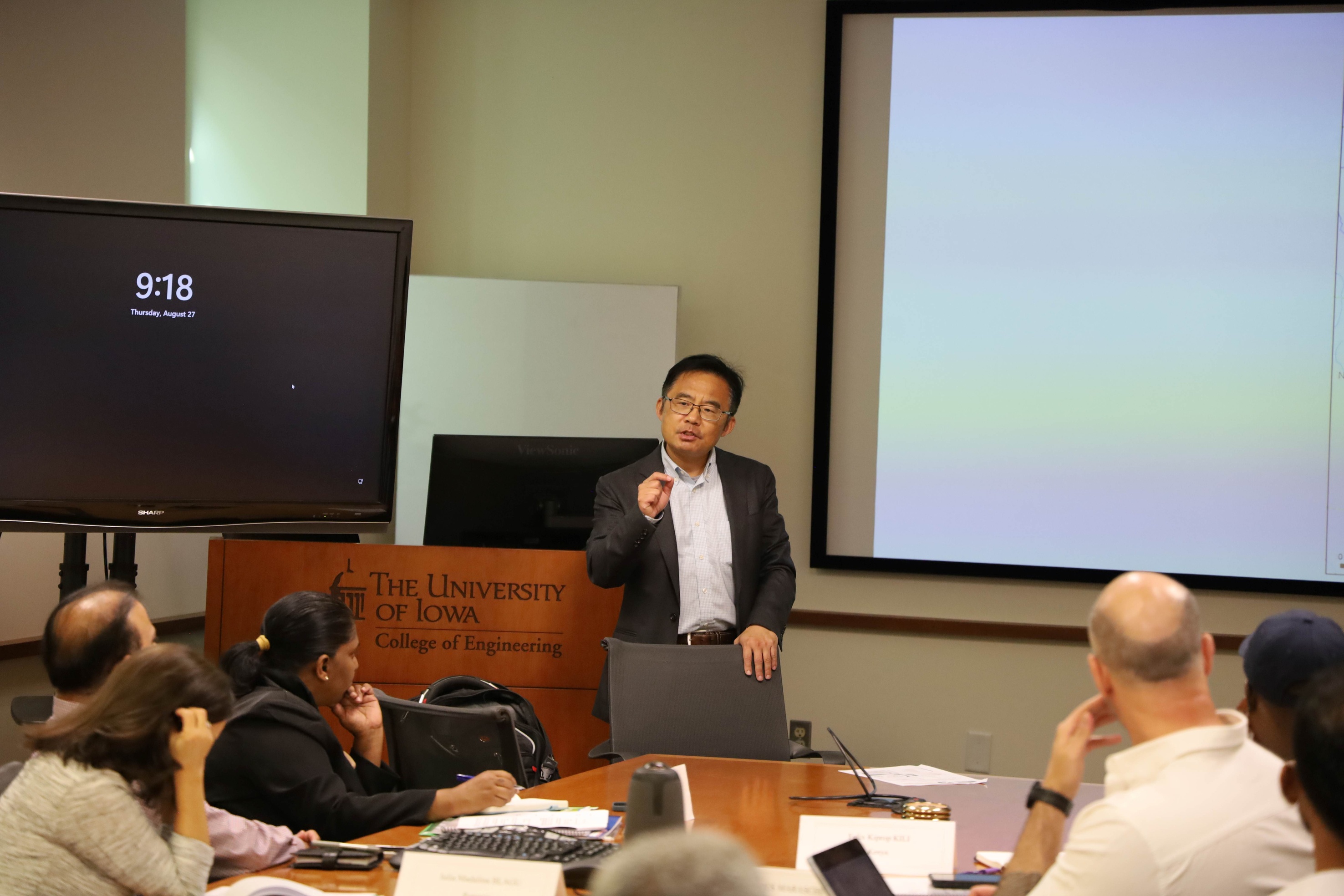
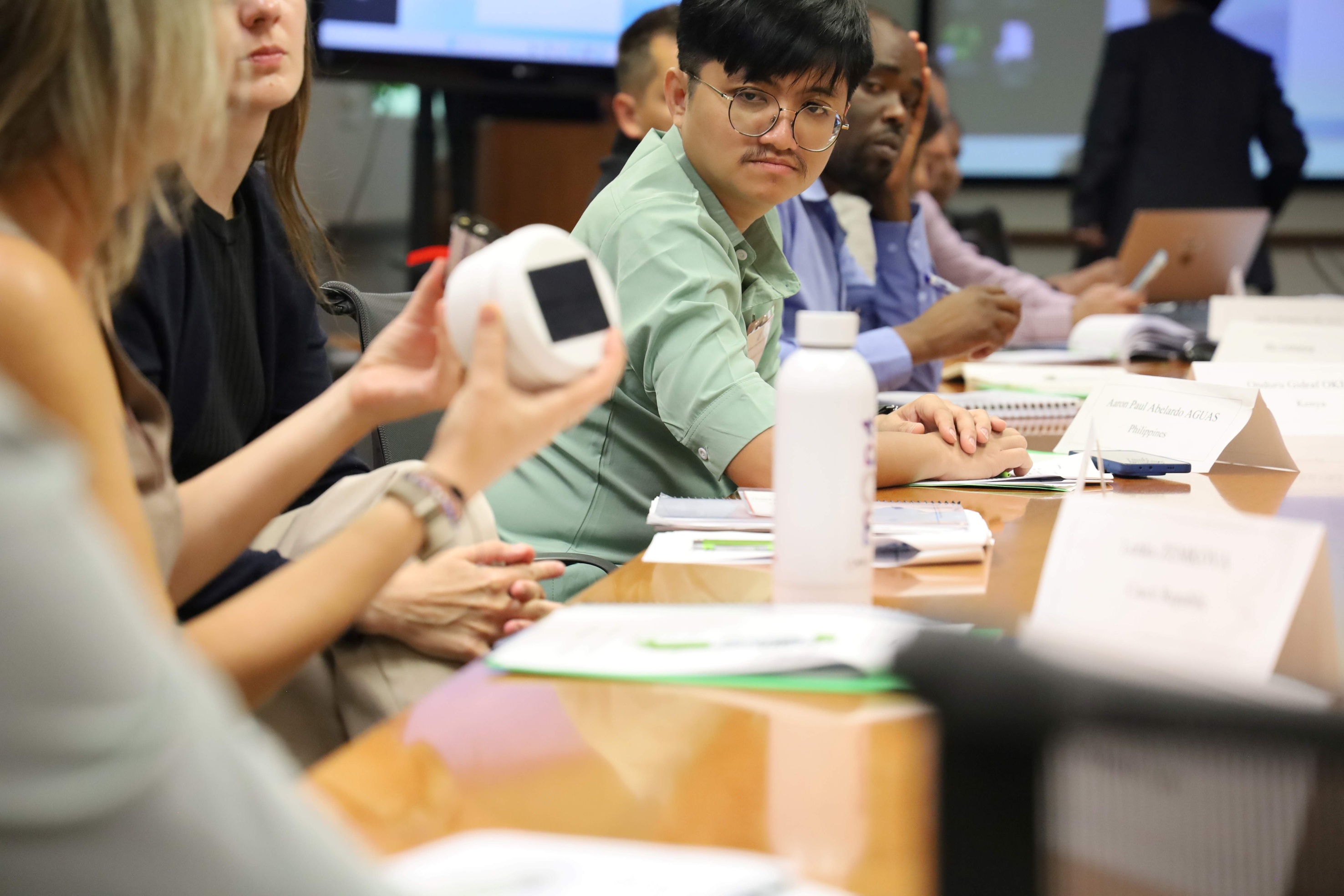
Visitors heard from Jun Wang, the Lichtenberger Family Chair in Chemical and Biochemical Engineering, about I-Canopy, a network of environmental sensors that provides hyperlocal, real-time weather and environmental data to farmers. Data collected by the sensors are transmitted to the cloud via a solar-driven wireless network and displayed through an online dashboard, allowing users to access real-time information from virtually anywhere.
"Farmers often make important decisions based on conditions that can vary dramatically from one field to the next," Wang said. "By providing real-time, location-specific data such as soil moisture, relative humidity, and temperature at your fingertips, I-Canopy helps producers make more informed decisions about irrigation, fertilizer application, and other farm operations, saving resources while improving efficiency."
Wang, who also serves as professor and departmental executive officer of chemical and biochemical engineering and associate director of the Iowa Technology Institute, shared how the sensor network is helping researchers better understand local environmental conditions while providing practical tools for agricultural producers.
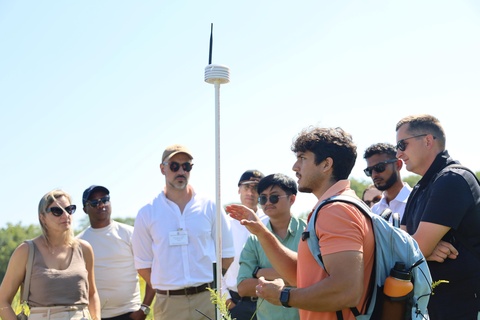
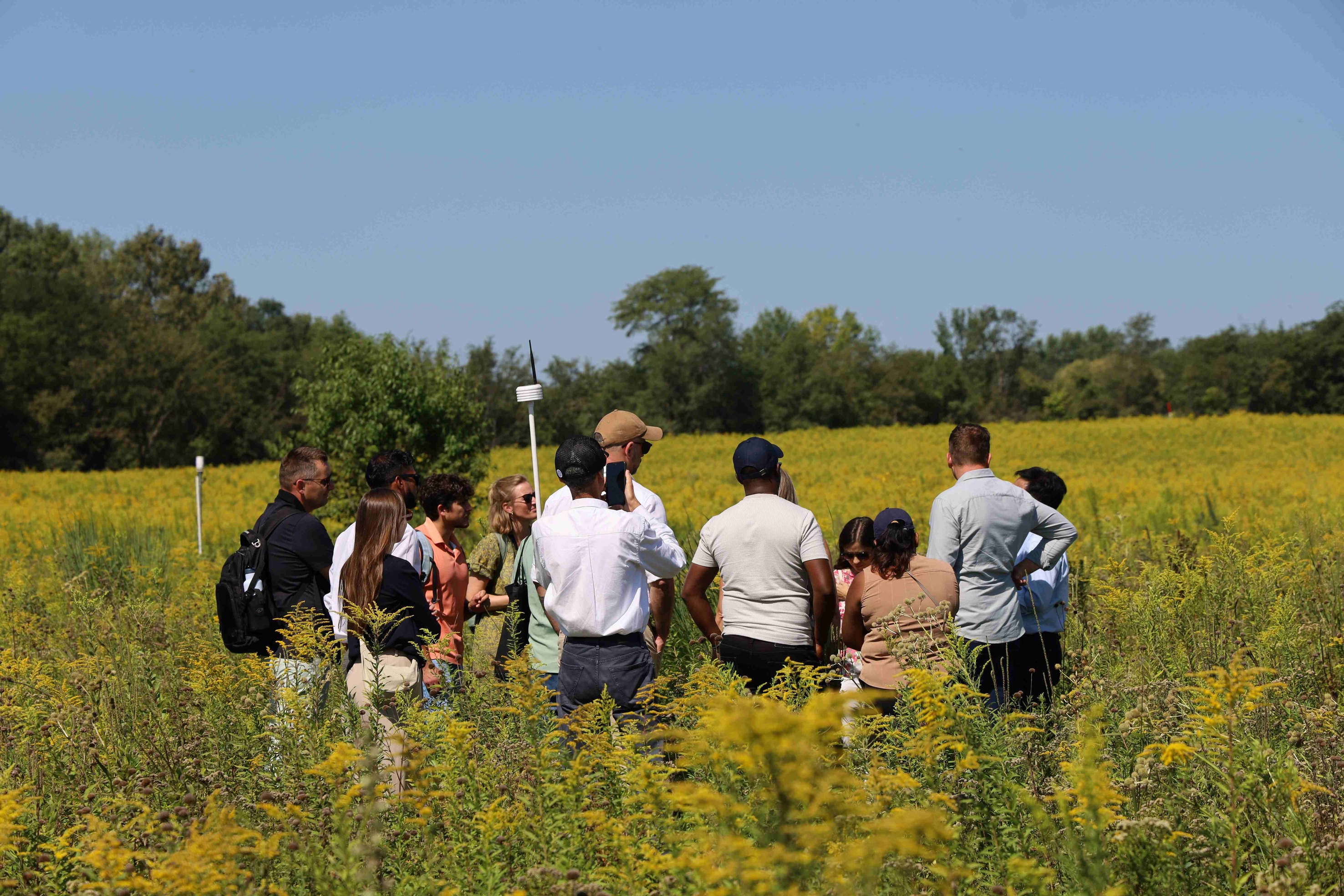
The visitors traveled to the Ashton Prairie Living Laboratory where Rafael Rangel de la Tejera, a PhD candidate in CBE, fielded questions about the I-Canopy sensors. Several sensors are installed on the 8.5-acre native tallgrass prairie that serves as a living research environment and demonstration site.
I-Canopy was developed with support from a $1.6 million United States Department of Agriculture grant to help build smart and connected rural communities. The program is now supported by a $6 million, multi-state (Iowa, Nebraska, Kansas, Arkansas) National Science Foundation grant to help agricultural communities manage extreme weather.
Established in 1940, the International Visitor Leadership Program is the U.S. Department of State's premier professional exchange program.
The initiative is designed to foster lasting relationships between Americans and current and emerging leaders in government, business, academia, and other fields. Program alumni include more than 500 current or former heads of state and government, 12 Nobel Prize recipients, more than 1,600 cabinet ministers, and more than 1,000 members of parliament worldwide.