
Getting involved in research as an engineering student offers valuable opportunities to deepen your understanding of technical concepts and apply classroom knowledge to real-world challenges. Participating in research helps you develop problem-solving skills, work closely with experts, and gain exposure to cutting-edge technologies. It can also strengthen your resume, open doors to internships or graduate programs, and give you a competitive edge in the job market. Whether you’re interested in innovation, design, or advanced study, research is an excellent way to expand your skills and shape your future career.
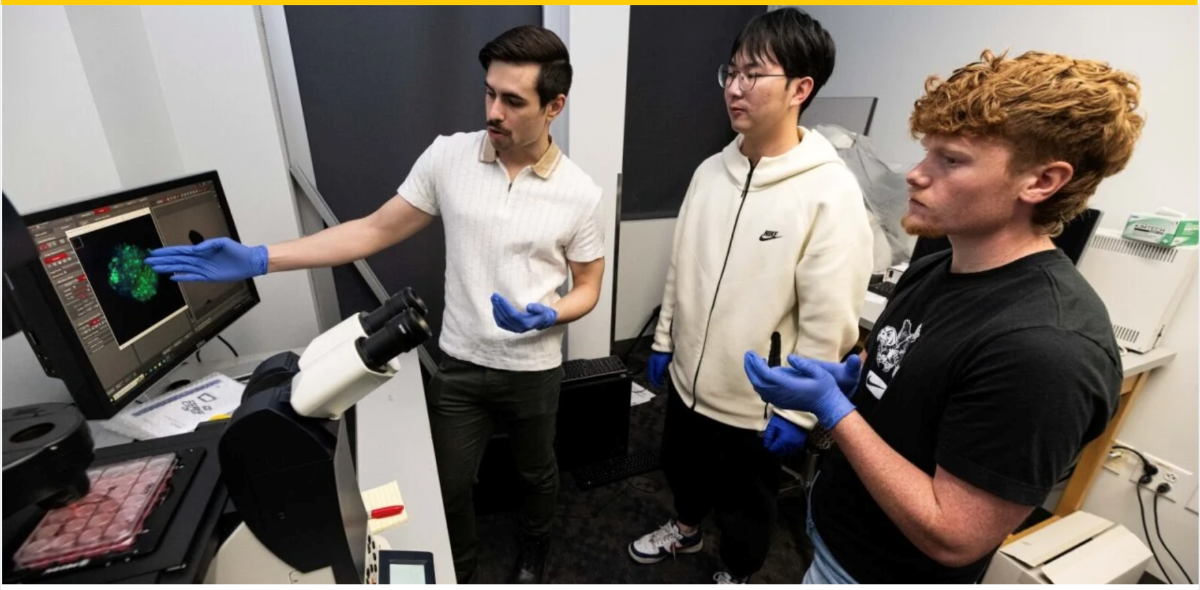
Research at the University of Iowa
How to get started
When considering entering a research experience, you should ask yourself a few key questions:
Why do you want to get involved in research?
What are your goals (both for the experience as well as for your career)?
How much time do you have to commit to your research?
Check out the medical research below to see if anything interests you,and reach out to the faculty member to ask if they have any open positions in their lab.
- BME Faculty Research
- Biomedical Imaging and Computational Modeling
- Medical Technologies and Device Design
- Precision Bioengineering and Regenerative Medicine
Use the following websites to browse current research position postings on campus.
Office of Undergraduate Research (OUR)
The Office of Undergraduate Research is committed to educating students through research, scholarship, and creative activities to benefit the research mission of the university.
Their website features
- A guide for how to start
- Summer opportunities
- Research ambassadors


Getting credit
BME undergraduate students can register for BME:3995 Undergraduate Research in Biomedical Engineering and apply up to 3 s.h. of BME:3995 research credit towards their focus area elective requirements by submitting a workflow form. The form is due by the first Friday of the semester that they take BME:3995, but students are encouraged to submit the form earlier than that for registration purposes. Students cannot be compensated for research performed under BME:3995 and should confirm their participation with their research mentor. Click here for more information!
Advice from students in research labs
1. Identify potential labs
- Talk to people in the Office of Undergraduate Research for referrals
- Search through the BME department website – reading about the research done in the labs of faculty members
- Use the other resources provided above
2. Decide on which labs from above match your interests
3. Write a SHORT email to those faculty with 1-2 sentences which includes the following
- Why you are interested in their research
- How their research matches your interest
- State how many hours per week you are available
- Optionally tell them if you have any relevant skills to offer, e.g. coding, pipetting.
4. Be prepared for many of them not to respond! Be prepared for many to say no!
- Depending on their response, consider asking if they can recommend someone else, e.g. a collaborator of theirs.
Summer Research Outside of the University
Summer research offers a chance to explore a topic you’re passionate about while gaining hands‑on experience in a real research setting. You’ll develop new skills, work closely with mentors, and contribute to meaningful projects that extend beyond the classroom. Many programs also offer benefits such as stipends, housing, travel support, workshops, and opportunities to present your work. For students hoping to grow academically and professionally, summer research can be a truly transformative experience.
Where to start looking

|
Online database that connects students to fully funded opportunities including summer research opportunities. |
|
Big Ten Academic AllianceOffers summer research opportunities at other Big Ten Universities. |

NSF REU
An REU (Research Experience for Undergraduates) is a program funded by the National Science Foundation where participants join cohorts of students at a host institution for 6-10 weeks in the summer.
- Students conduct research under the mentorship of a faculty member, participate in professional development and social activities, and present their findings.
- Positions include a stipend and often additional support for housing, food, and travel.
- Most applications close in late January or early February.
- Past sites have included research areas such as pediatric prosthetics, rehabilitation engineering, nanotechnology in biomedicine, biomedical imaging, biological materials & biological processes, cell manufacturing, and robotics.
- You can find out more, including a list of host sites, by clicking the link above.