University of Iowa engineering students thrive on tackling ambitious projects, from robots and aircraft to planetary rovers. But for many undergraduates, joining those efforts can feel intimidating.
After hearing feedback from younger students who were hesitant to participate in technically demanding activities, a group of students developed Assemble. Wire. Drive., a hands-on workshop series designed to make engineering skills more accessible.
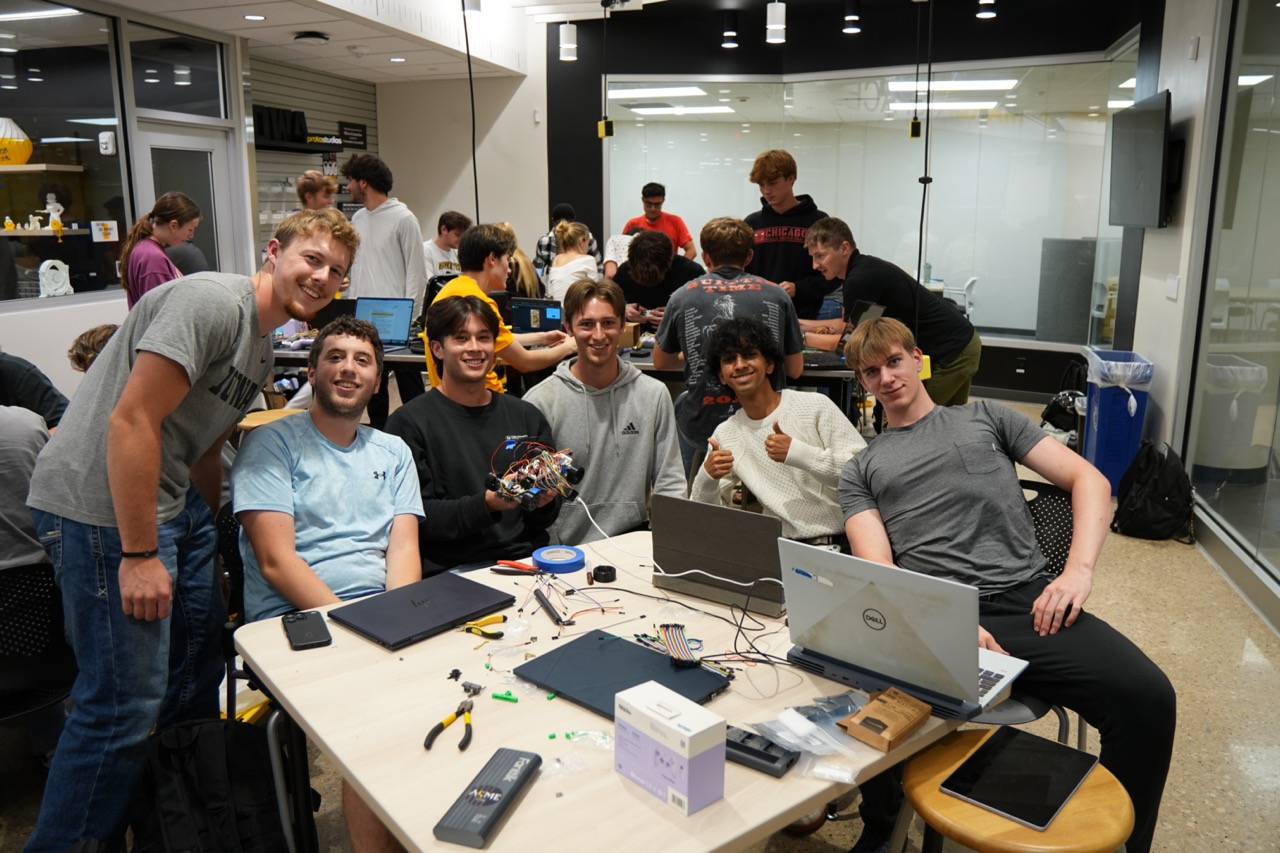
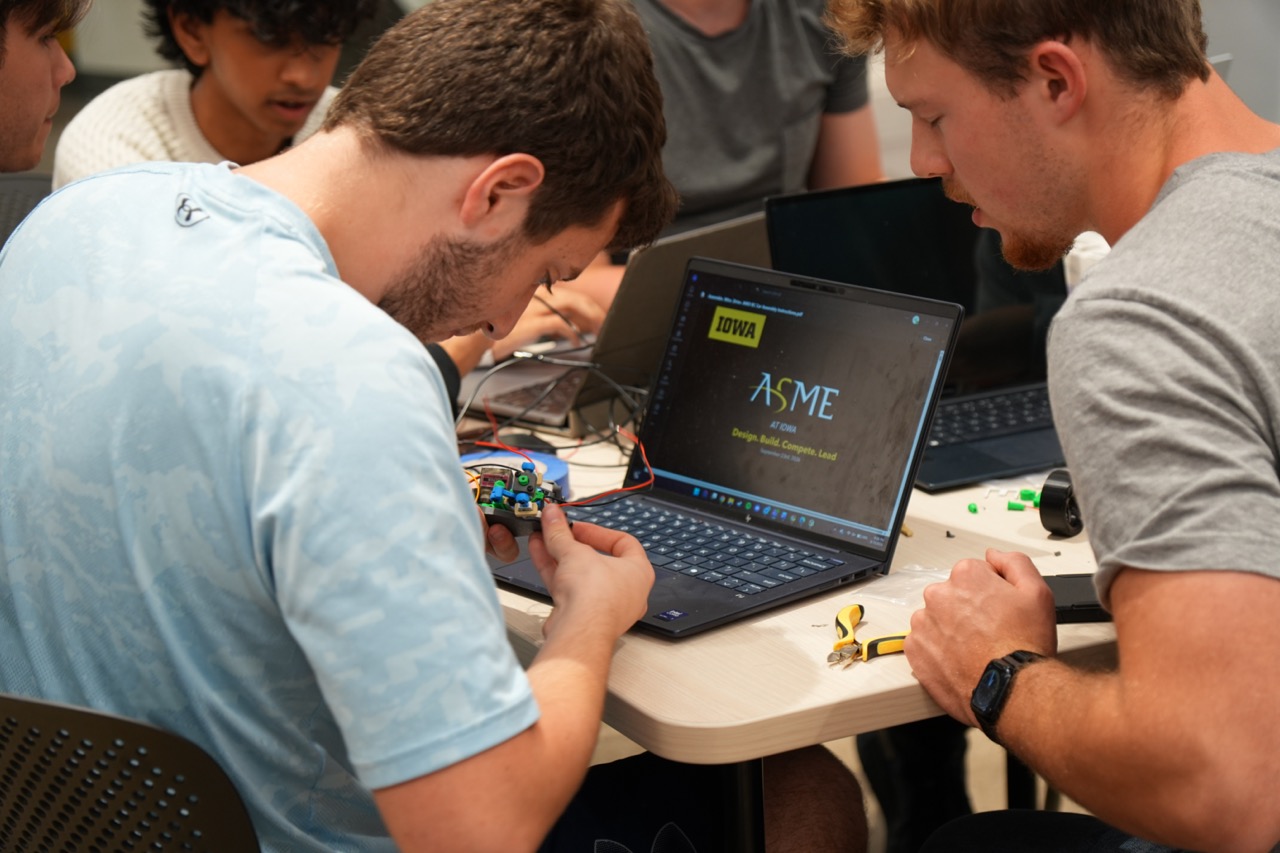
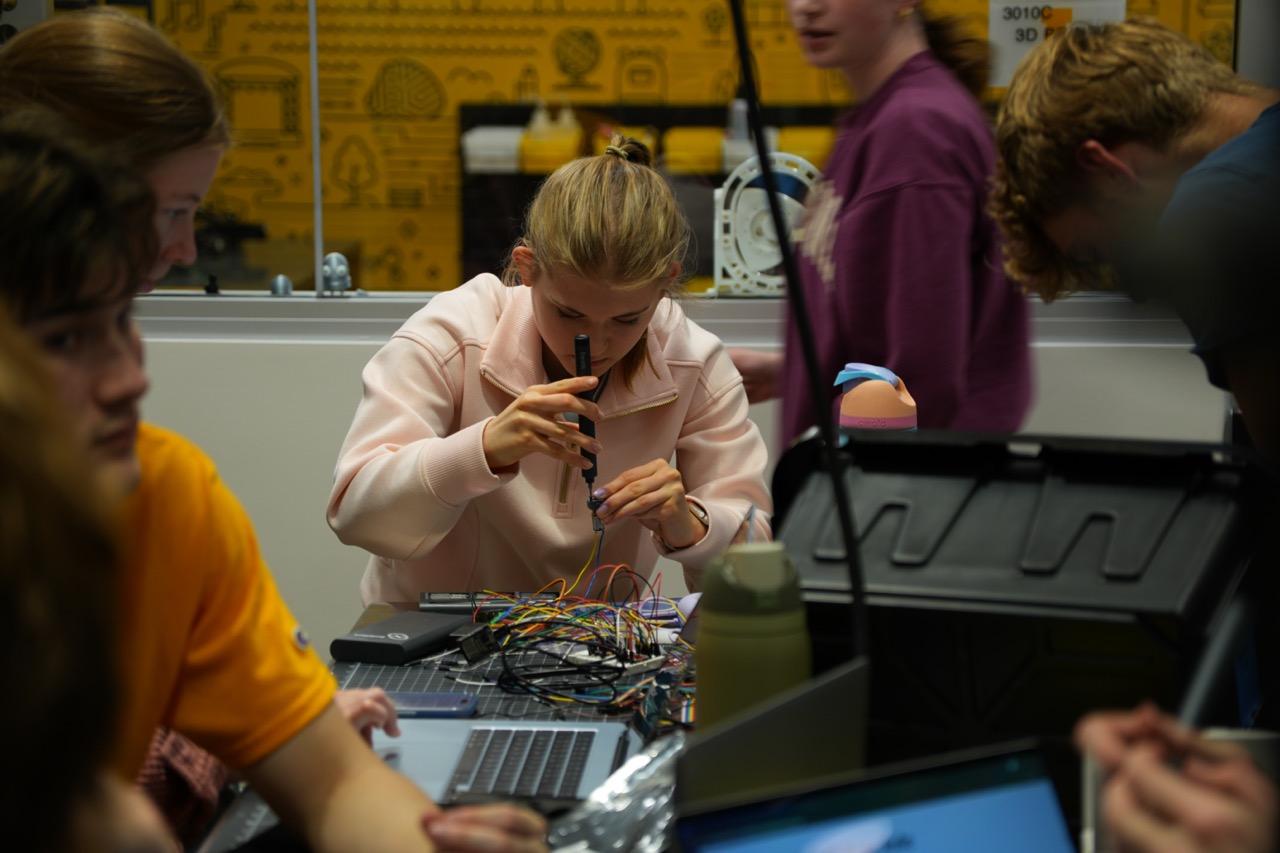
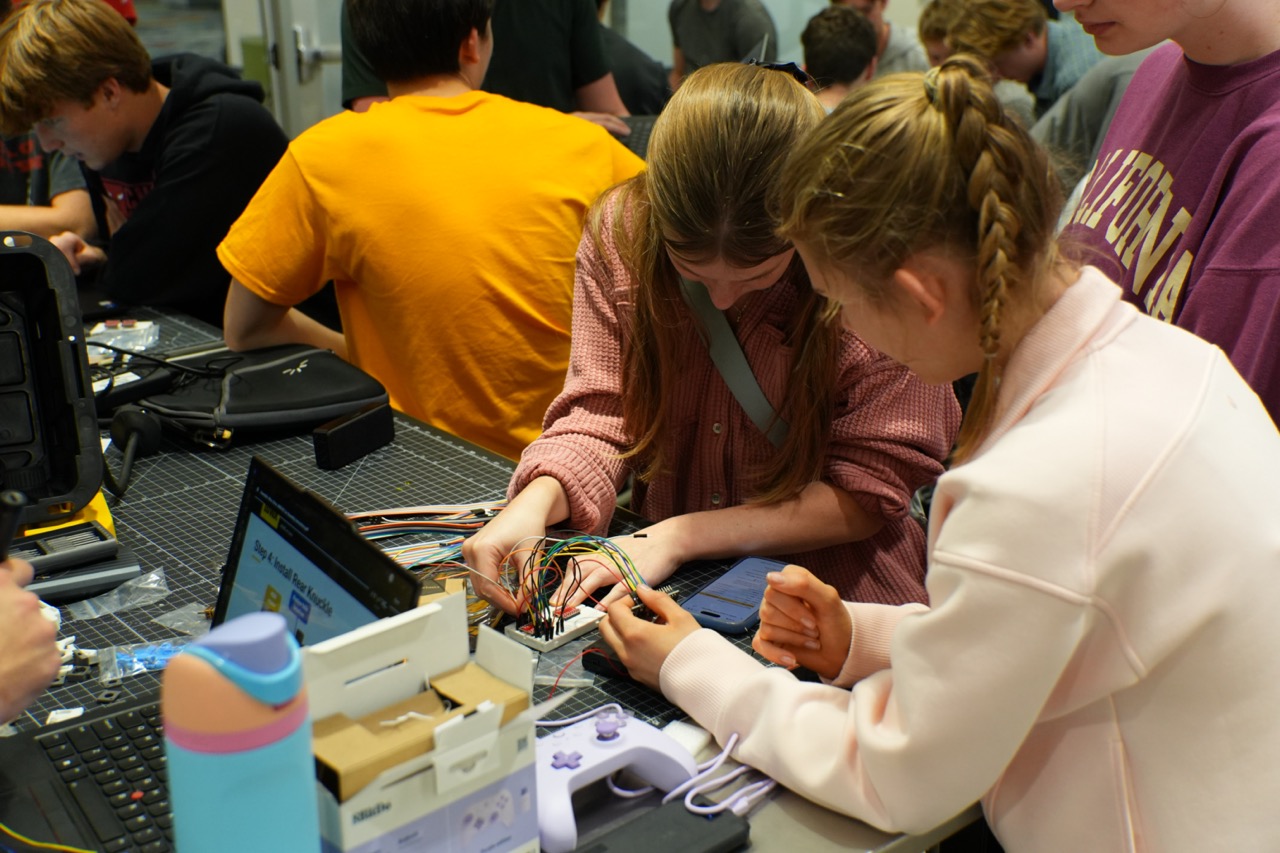
The challenge for the participants: build a radio-controlled car from the ground up.
“For a first-year student especially, walking into a technical organization can be intimidating when you see upperclassmen working on robots, aircraft, rovers, and other complex projects,” said Brayden Nagra, a mechanical engineering student from Hartford, Wisconsin, and president of the American Society of Mechanical Engineers chapter at Iowa.
“An event like this gives them a much more approachable starting point. They get to physically build something, see it work, and realize that these skills are learnable.”
- Brayden Nagra, University of Iowa mechanical engineering student
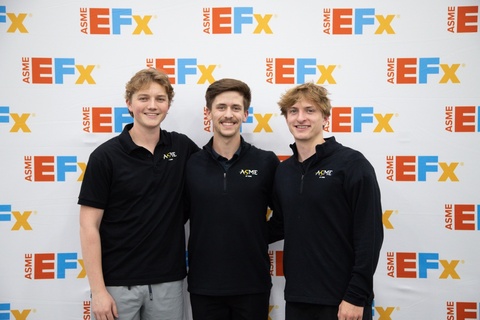
Nagra, Michael Darmody, a mechanical engineering student from Egan, Minnesota, and Paul Conover, an industrial engineering student from Okoboji, Iowa, have led the effort to make engineering more accessible.
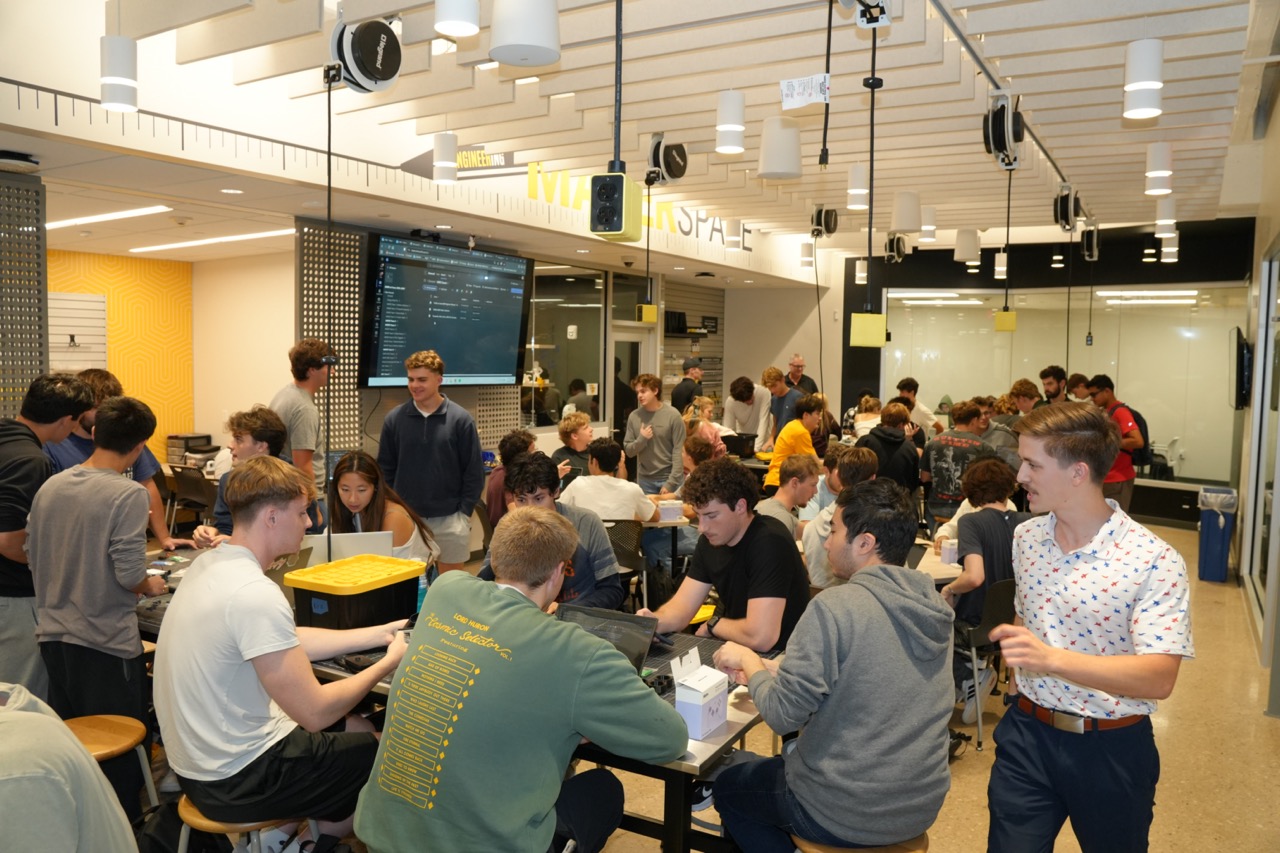
With support from Ann McKenna, Dick and Judy Smith Dean of the College of Engineering, and college leaders, the students launched the workshop series at the Makerspace in Burge Residence Hall. More than 70 students participated.
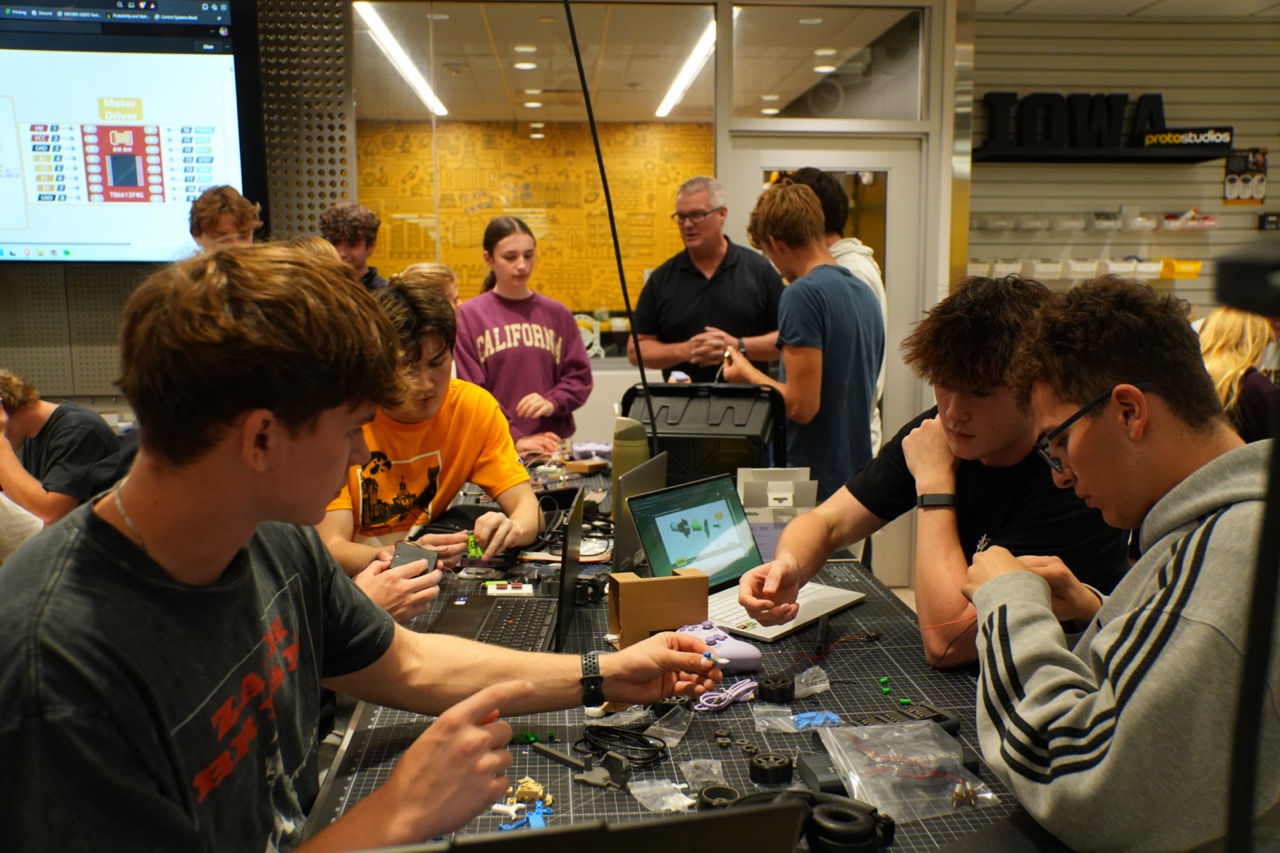
Throughout the event, students assembled, wired, programmed, and tested their vehicles while gaining experience across multiple engineering disciplines. Participants developed skills in mechanical and electrical systems, troubleshooting, collaboration, and systems integration as they transformed individual components into a functioning machine.
“We specifically designed it so that you did not need to be a mechanical engineer, an upperclassman, or someone who already had technical experience,” Nagra said. “We had students with very different backgrounds working together toward the same goal.”
The impact extends well beyond the workshop itself.
Students can apply the skills they learned to coursework, helping bridge the gap between classroom theory and real-world application. The RC cars also provide a platform for continued learning, with organizers planning additional workshops that build on the initial experience.
Looking ahead, Conover, Darmody, and Nagra plan to adapt Assemble. Wire. Drive. for younger audiences through outreach initiatives such as Party After the Parade and other community STEM events, introducing future Hawkeyes to engineering through hands-on exploration.
“Hands-on experiences teach students how to work through uncertainty,” Nagra said. “Combining the theory students learn in class with opportunities to design, build, fail, troubleshoot, and improve something is what really develops an engineer.”