Researchers with the Iowa Geological Survey (IGS) at the University of Iowa have found evidence that naturally occurring hydrogen gas has accumulated deep beneath Iowa, raising the possibility of a future low-cost, near-zero-emission energy source.
The discovery starts with a largely forgotten gas sample from 1969.
At a now-abandoned natural gas storage field near the town of Vincent in Webster County, a well sample tested at about 96% hydrogen. At the time, hydrogen wasn’t a priority, so the finding was recorded but never explained.
Decades later, a widely cited 2020 scientific paper pulled together hydrogen measurements from around the world and flagged that old reading as one of the highest known, effectively putting a “bullseye” on Iowa.
“I remember thinking, ‘Where is this well?’” said Joe Honings, a hydrogeologist and geophysicist at IGS and lead author of a new study published in Scientific Reports. “We pulled it up in our database and realized we had detailed records that could help us figure out what really happened there.”
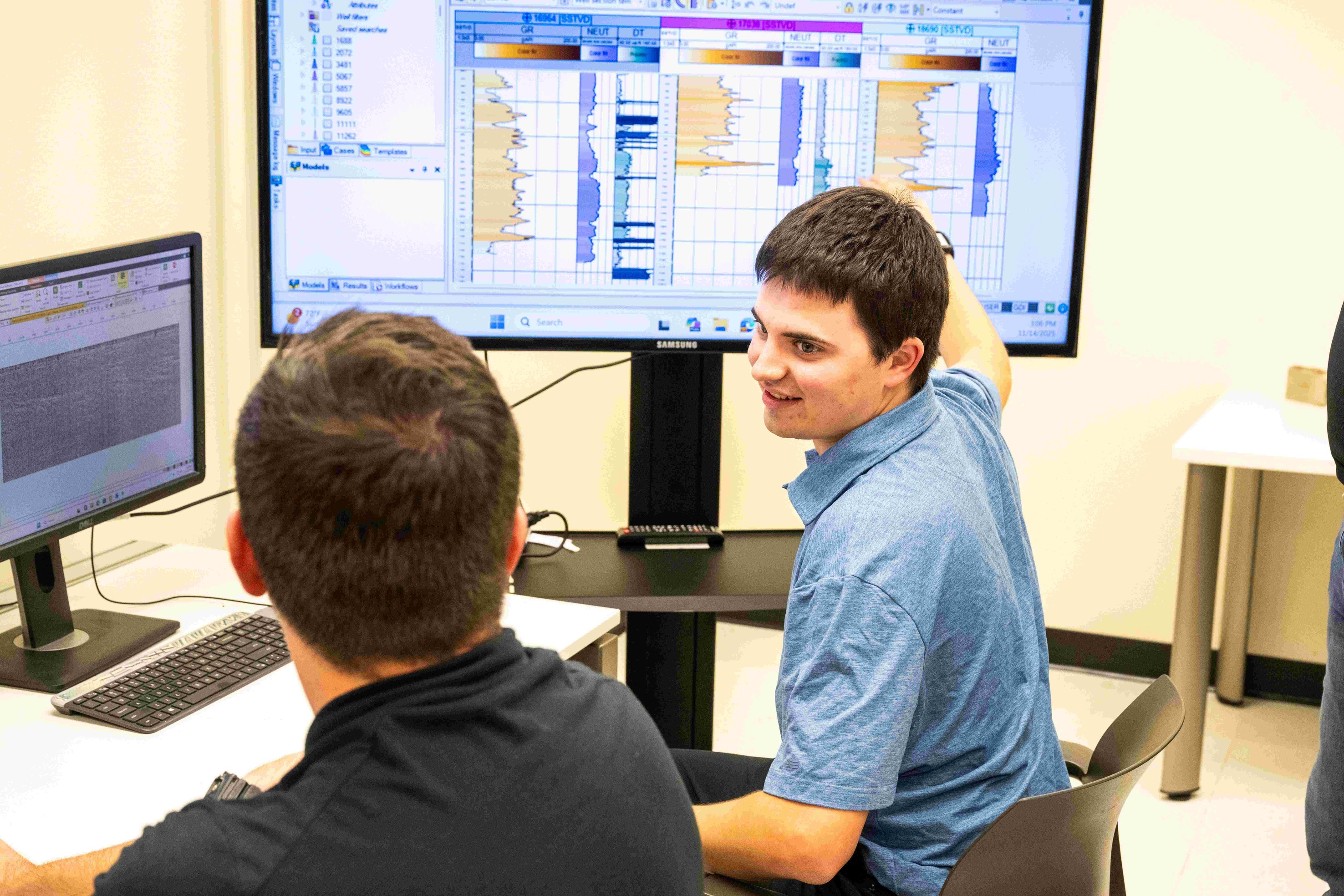
Well logs — long strips of paper with squiggly lines showing how different rocks and fluids change with depth — were recorded in the 1950s and 1960s, then stored in boxes for years and later scanned as PDF images.
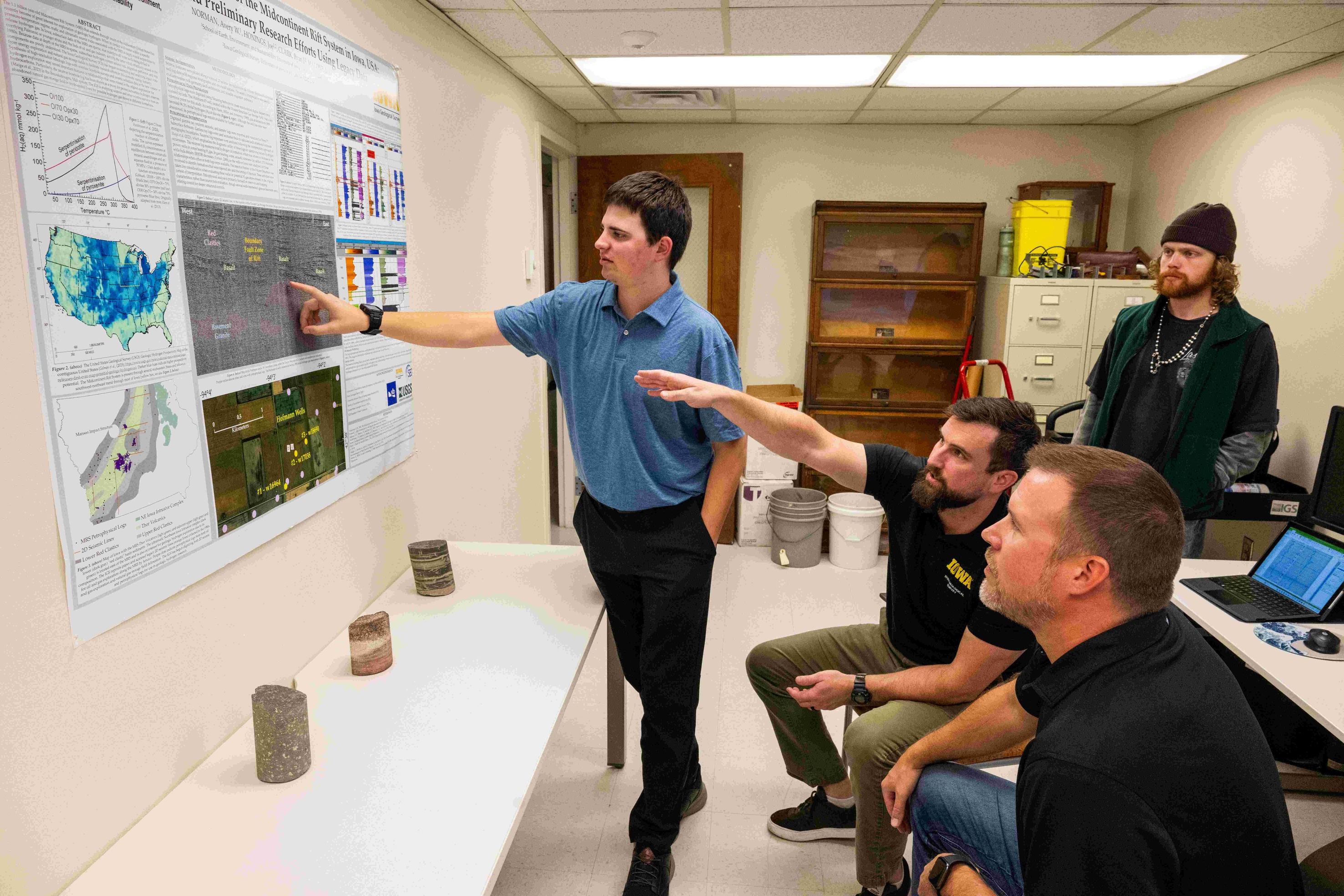
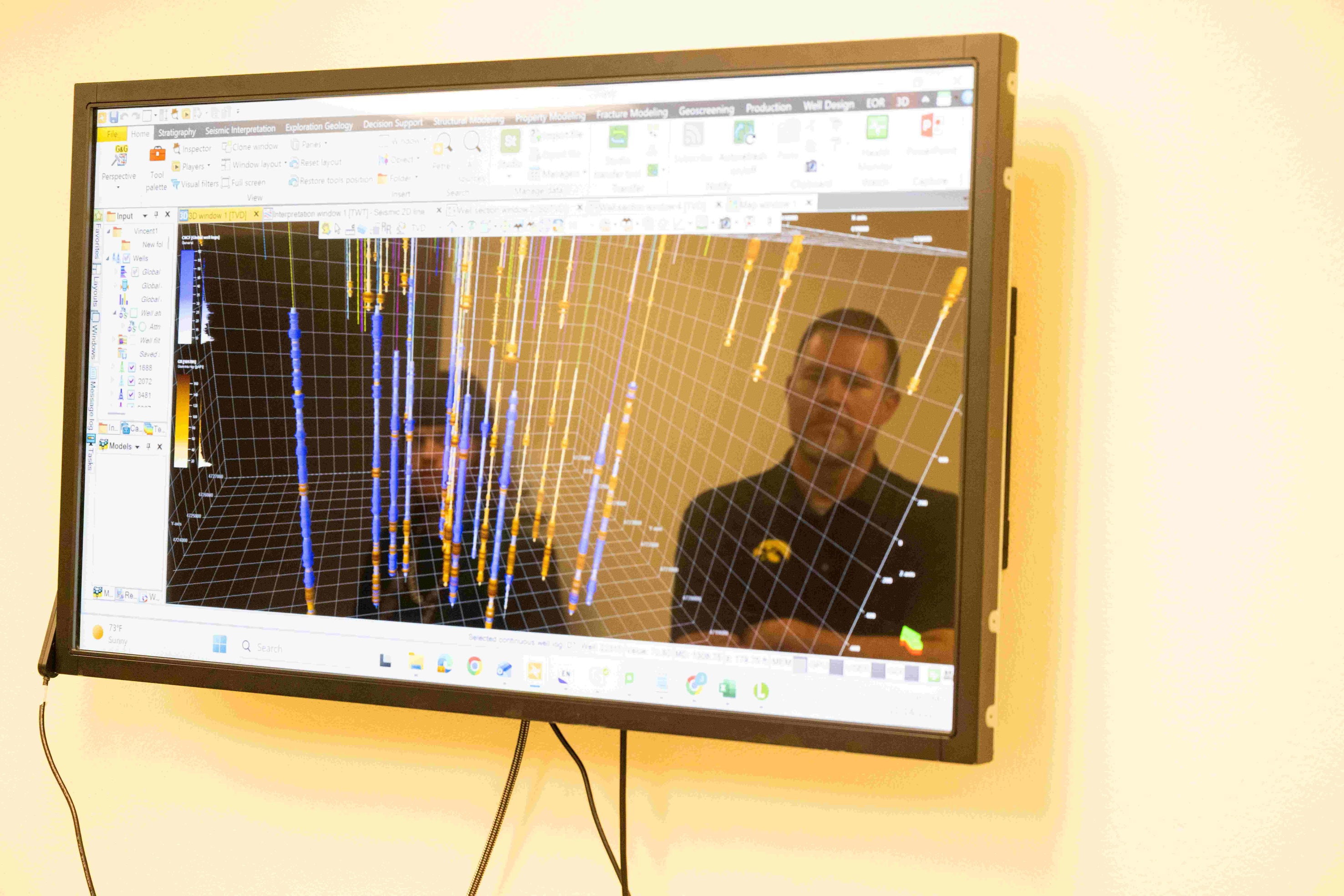
Supported by the National Geological and Geophysical Data Preservation Program at the U.S. Geological Survey (USGS), student researchers painstakingly digitized the logs by overlaying grids, entering scales, and tracing squiggles such as gamma ray, resistivity, and neutron-gamma responses so data could be reanalyzed using modern techniques and software donated by industry.

"It has been an amazing opportunity to be at the forefront of geological hydrogen research here in Iowa,” said Zoe Shadravan, a UI senior from Ankeny, Iowa, studying sustainability. “With no background in geophysics, I was able to build my understanding of geology, policy, and technology. The Iowa Geological Survey has been an amazing part of my college experience here at the University of Iowa. They are a very dedicated and ambitious team that has done an incredible job bridging academic research with real-world industry applications."
Other members of the research group — Avery Norman, Chase Evanson, and Lillie Carreon — all graduated in spring 2026.
Taking a fresh look at the Vincent field, IGS researchers found that an older type of logging tool showed a strong signal in the same part of the well where the 96% hydrogen sample was taken. By comparing multiple measurements and reconstructing the timeline of operations at the site, the team concluded the hydrogen was a real underground accumulation, not an old gas storage artifact.
A 2021 USGS online map also highlighted the Midcontinent Rift System, a 1.1-billion-year-old geological structure running thousands of feet beneath parts of Iowa, as a promising target for hydrogen. Researchers believe hydrogen was created when water reacted with iron-rich volcanic rocks or basalts deep in the Midcontinent Rift, then moved through cracks and collected in shallower reservoirs in the Eau Claire formation that acted as a natural container.
The study does not determine the size or commercial viability of the resource. Instead, it provides a proof of concept: hydrogen can be generated, trapped, and detected in Iowa’s subsurface, and legacy data—much of it digitized by students—can guide further exploration.
“This study shows that the data IGS has reposited for decades is incredibly valuable for modern energy questions,” Honings said. “We did this essentially with no dedicated funding. With more resources, we could do much more to help Iowa navigate this emerging clean energy frontier.”
In addition to Honings and the students, research contributors include Ryan J. Clark, John E. Malone, Melissa Evans, Hang Chen, Mengli Zhang, and Youguo Li. Partner organizations include Battelle Carbon Services of Mason City, Iowa, the UI’s School of Earth, Environment, and Sustainability, and the Center for Geophysics, Energy, and Minerals at the Colorado School of Mines in Golden, Colorado.