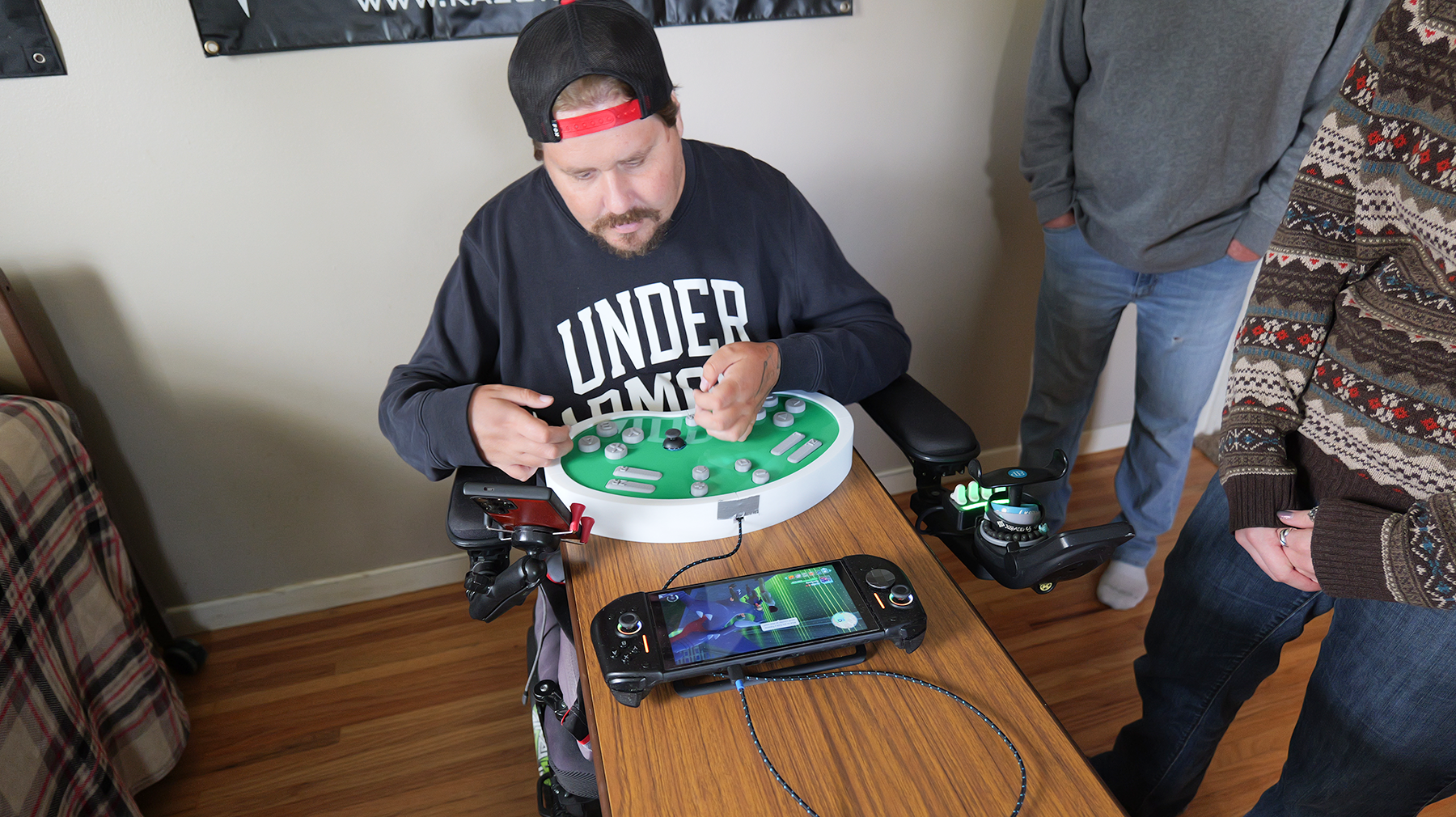
For Dylan Huntbach, video games are an important source of entertainment and a social outlet, especially during Iowa’s long winters. But after a cervical spinal cord injury over a decade ago limited his mobility and hand function, many video games became difficult or impossible to play using a standard video game controller. A team of biomedical engineering students at the University of Iowa set out to change that.

As part of the course Advanced Medical Device Design, students Hope Mickey from Stillman Valley, Illinois; Drew Bingham from Homewood, Illinois; Ashley Streck from Sergeant Bluff, Iowa; and Evie Del Campo from Papillion, Nebraska, partnered directly with Huntbach to design a custom Nintendo Switch controller tailored to his needs. Rather than being given a specific solution, the students were challenged to understand the client’s daily life and develop their own solutions.
“We received information about Dylan’s injury and talked with him about the things he wanted to do,” said Hope Mickey. “Gaming was one of the activities that was important to him, so we worked closely with him throughout the design process to create something that fit his needs.”
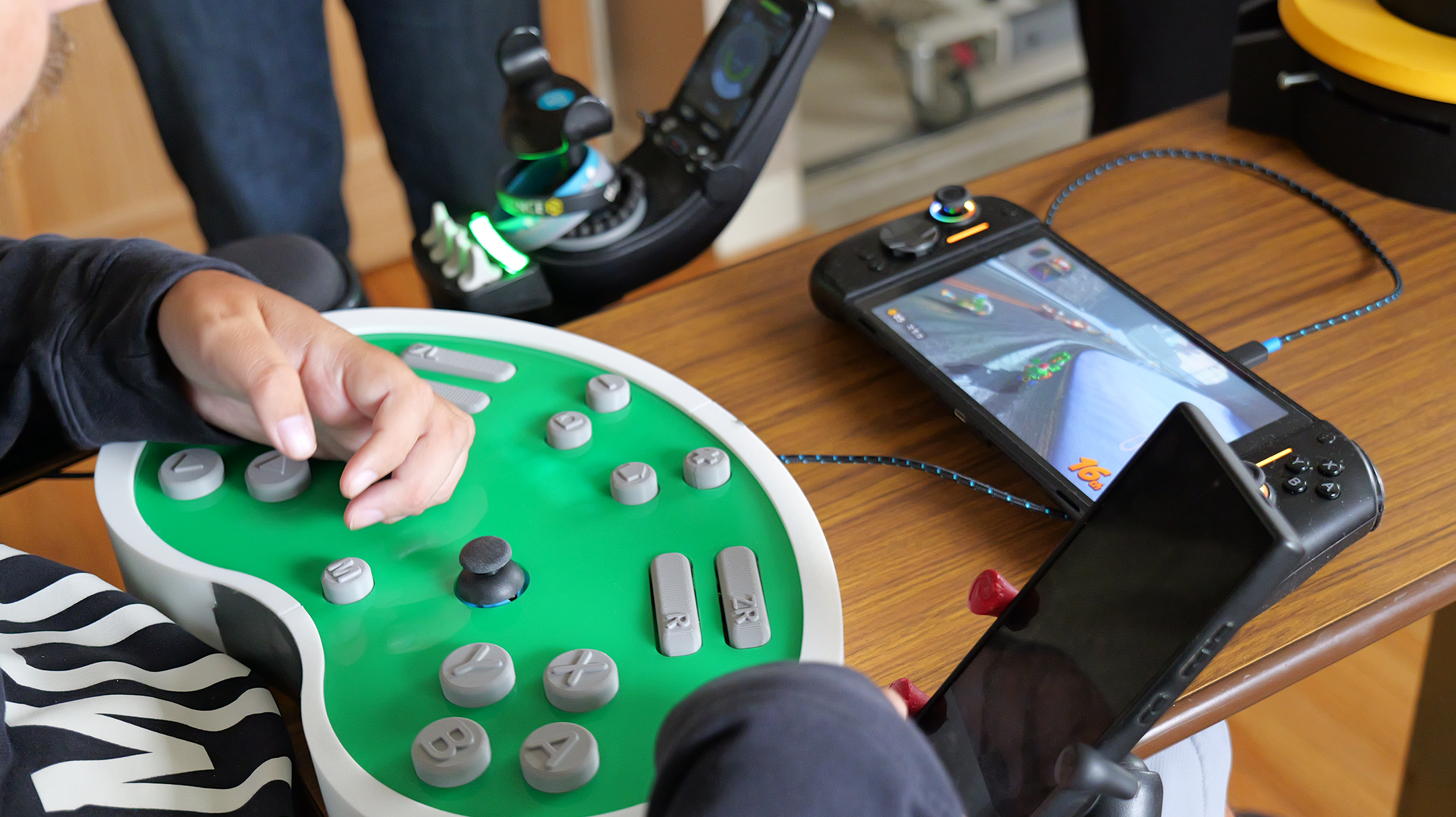
The team developed a large-format controller with oversized buttons, custom layout, and joysticks. Using acrylic, 3D-printed components and a Raspberry Pi microcontroller, the students designed, built, and tested a working prototype for the Nintendo Switch.
Huntbach recently tested the device and then got to keep it at his home in Waterloo. “This is awesome, it feels great,” he said. “I could play online more now with friends, and other games that I haven’t been able to play before.”
Colleen Bringman, associate professor of instruction, biomedical engineering, said the course is really about learning how to prototype a concept from start to finish, not the final outcome. “But this was an exceptional outcome,” she said. “They went beyond the minimum requirements, and it was something that can successfully be used in the setting it was designed for.”
For the students, they got to create technology that directly improves someone’s quality of life—including Pokémon, Mario Kart, and all.