A new patent by University of Iowa researchers combines collision avoidance technology with regenerative braking systems used in electric vehicles to improve emergency braking response time.
Christopher R. M. Rundus, a former industrial and systems engineering PhD student, and Daniel McGehee, director of the University of Iowa Driving Safety Research Institute, have received the patent.
“This patent takes emergency braking to the next level by making it respond faster,” said McGehee. “This has the potential to reduce forward collisions, thereby reducing and eliminating some injuries and improving road safety,” said McGehee.
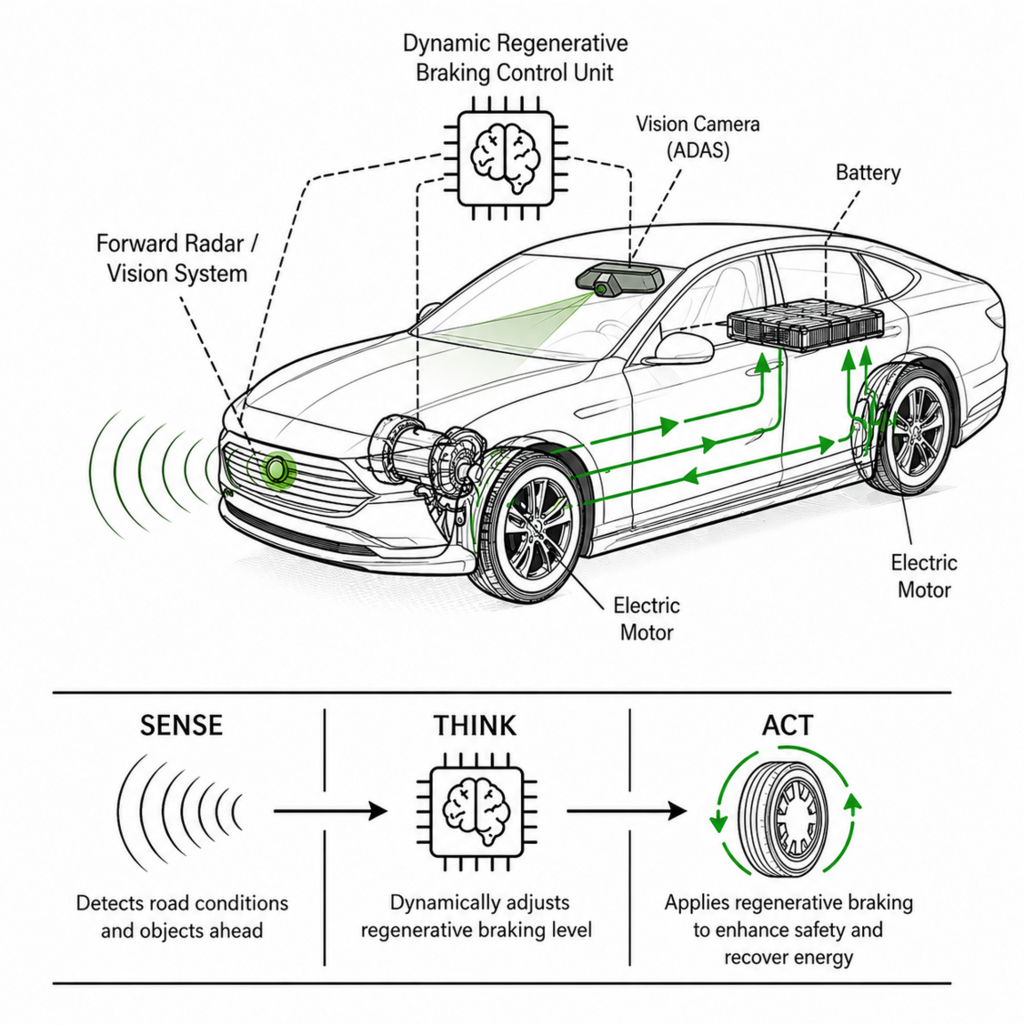
Current braking systems must wait for the driver to press the brake pedal to engage the vehicle’s traditional friction brakes and avoid a collision in an emergency braking situation. This new patented system uses sensors, like computer vision, to anticipate hazards in the road and begins slowing the vehicle as soon as the driver releases the accelerator pedal by using the vehicle’s regenerative braking system instead of the vehicle’s friction brakes.
Typical regenerative braking systems found in electric vehicles begin slowing the vehicle as soon as the driver lifts off the accelerator pedal by reversing the spin of the electric motors and feeding the kinetic energy from braking back into the vehicle's battery. This new system leverages that energy-saving capability but dynamically adjusts the amount of regenerative braking based on the driving environment. By increasing regenerative braking when a potential hazard is detected, the system provides as much deceleration as needed to help avoid or mitigate a collision while the driver transitions from the accelerator to the brake pedal. When no hazard is present, regenerative braking remains at its normal level, avoiding unnecessary aggressive deceleration during routine driving.
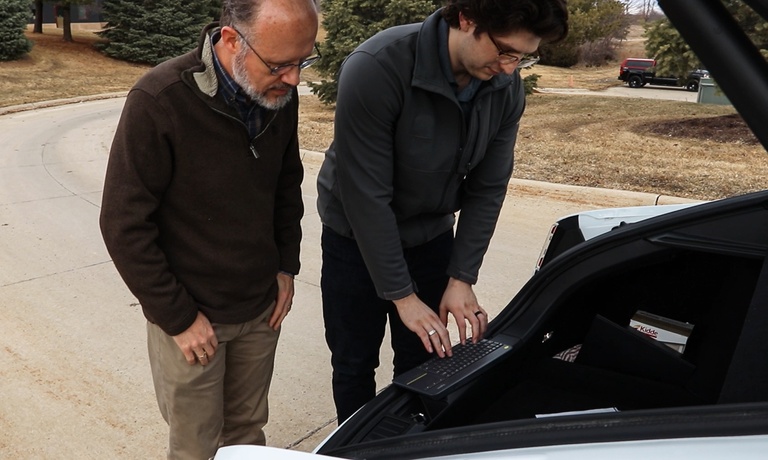
Rundus’ PhD dissertation while at Iowa focused on the safety benefits and response times of regenerative braking systems. He and Chris Schwarz, director of engineering and modeling research at DSRI, measured how far a Tesla Model S75D traveled from when the foot is lifted off the accelerator pedal to the time the brake pedal is depressed. The study was funded by a SAFER-SIM University Transportation Center grant.
After finishing his PhD at Iowa in 2022, Rundus worked as a postdoctoral researcher at The Ohio State University. He is now an assistant professor at Michigan Technological University in the Department of Psychology and Human Factors.