As Christopher Wenger built a career in aerospace in Iowa, he faced a decision common among engineers: stay in Iowa or head for one of the nation's established aerospace hubs.
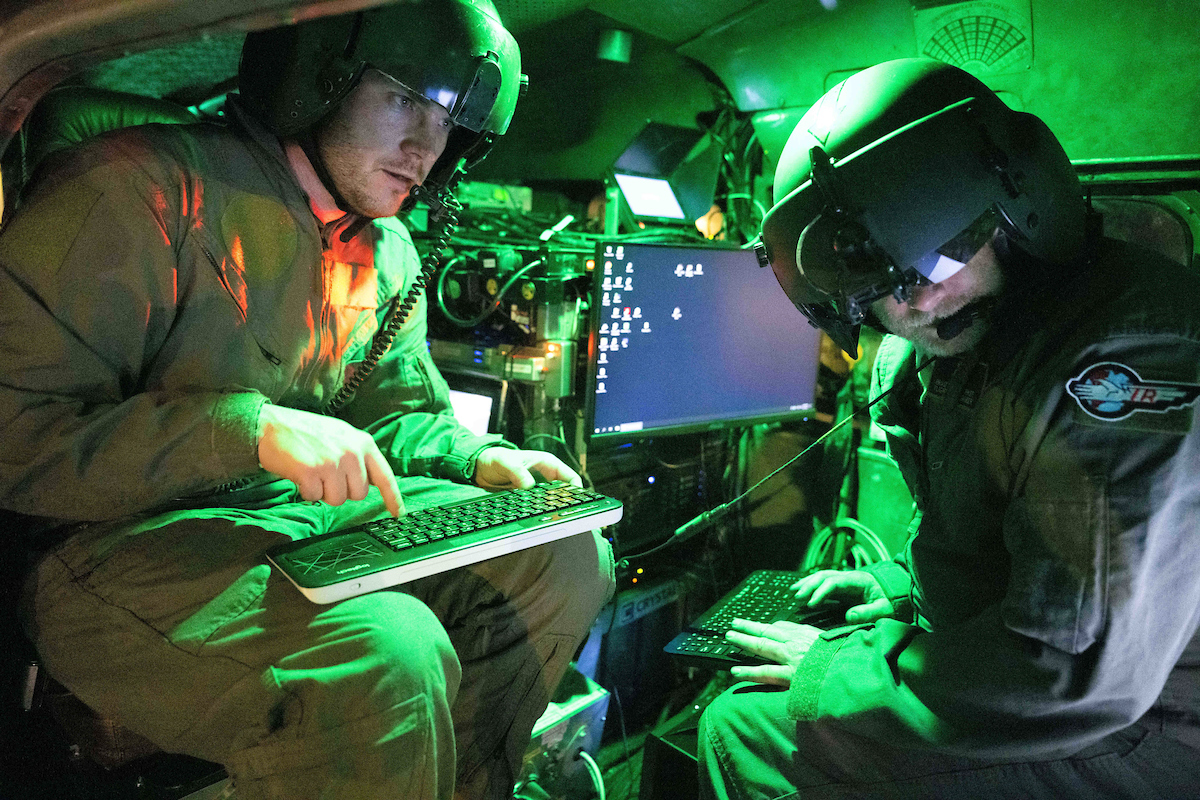
Wenger, of Cedar Rapids, is grateful he found a path that let him build a career here. He works full time as a software engineer for BAE Systems while pursuing a PhD at the University of Iowa, where he conducts research through the Operator Performance Laboratory (OPL), one of the nation's leading flight-test facilities.
But Wenger knows many talented engineers are not as fortunate.
"Too often, Iowa trains talented engineers who end up leaving the state because that's where the opportunities are," Wenger said. "Initiatives like Ascentus can help create more opportunities here, so graduates can build careers in Iowa instead of feeling like they need to move elsewhere to grow."
As public and private sector leaders in Iowa launch the Ascentus Aerospace Hub (promotional video) initiative to attract aerospace investment and accelerate innovation, forces in industry, infrastructure, workforce development, and research are being combined to create an environment where aerospace and aviation companies can thrive and skilled graduates find reasons to stay.
The hope is to attract a mix of large- and medium-sized companies to Iowa, increasing high paying jobs in aerospace and defense that would keep recent graduates in-state and help retain existing workers. While there are no Iowa projections, an Oliver Wyman market analysis underscores the potential by citing examples such as 2,000 jobs from Joby's new facility in Dayton, Ohio, and 4,000 jobs from Anduril's Columbus facility.
UI's research capabilities — including OPL and the Iowa Space Flight Laboratory — are positioned as a key asset to the initiative.
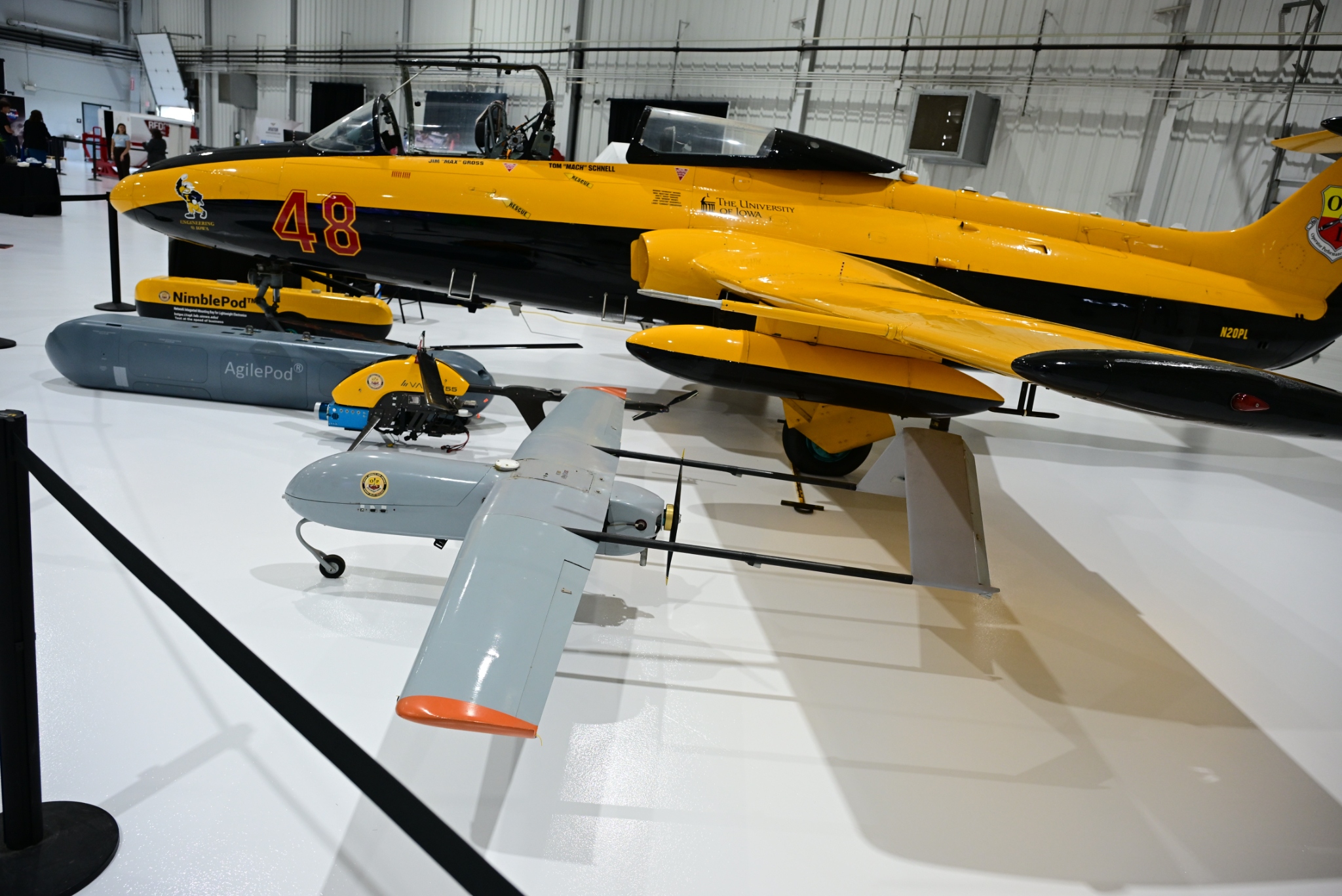
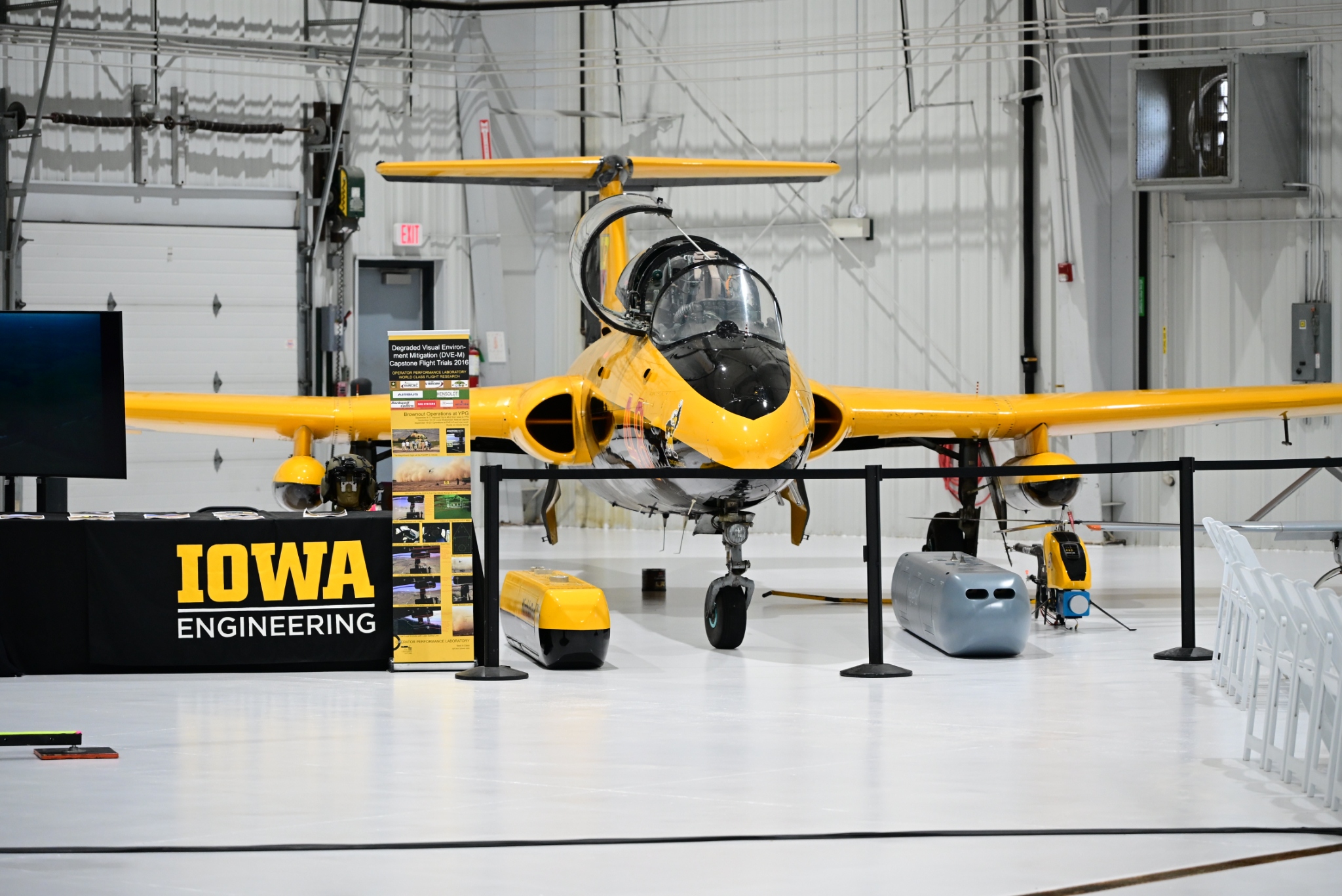
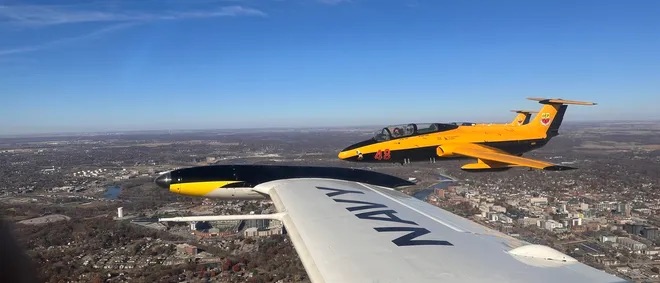
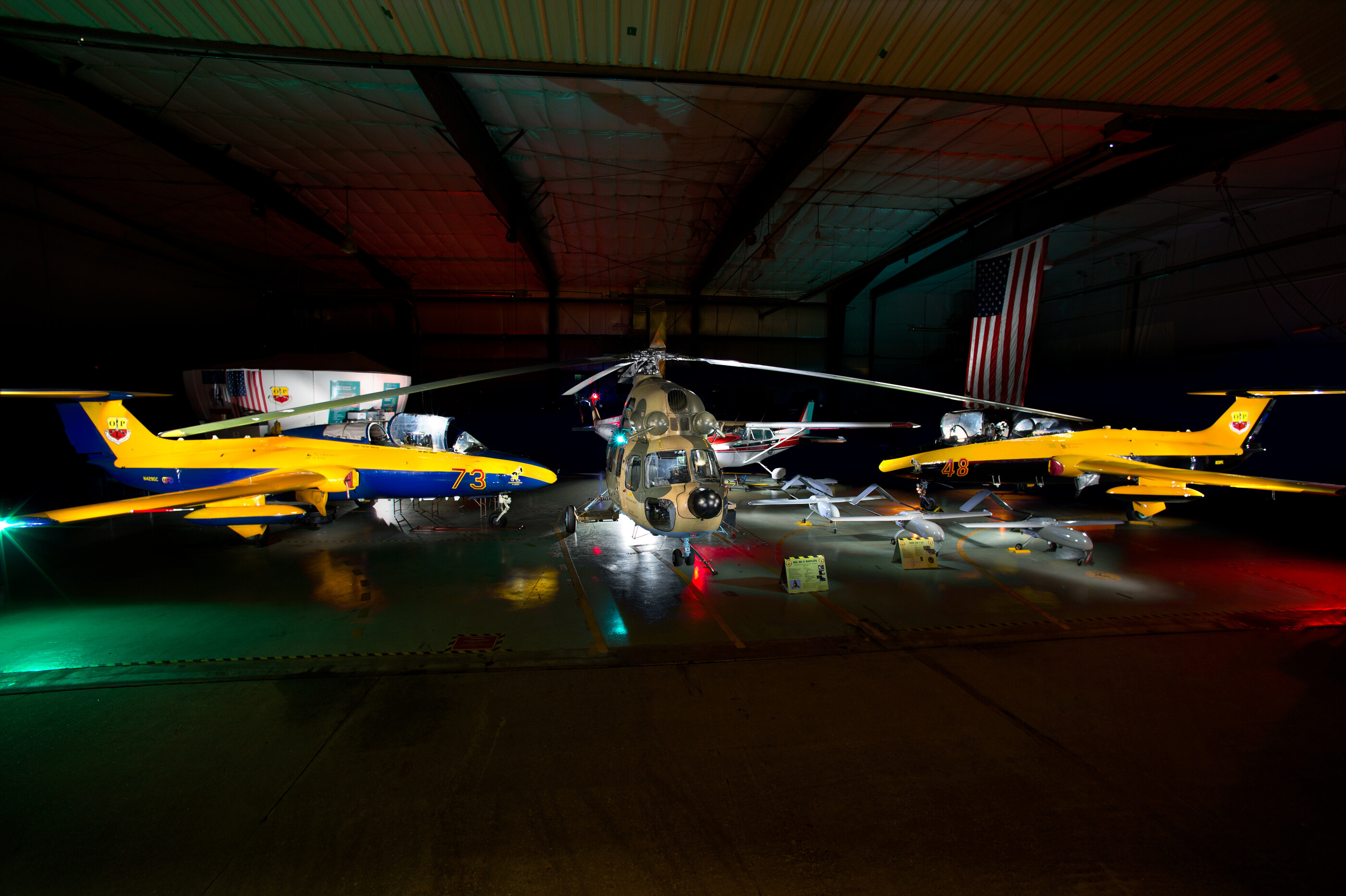
OPL, part of the Iowa Technology Institute within the UI College of Engineering, offers something that few university research facilities can: the ability to test aerospace technologies in real-world flight environments using highly instrumented aircraft, jets, turbine helicopters, and flight simulators.
Wenger develops technologies for aerospace applications and was introduced to OPL through work projects.
"We were able to partner with OPL to test mission-critical airborne sensor systems used in defense and aerospace applications in real-world conditions," Wenger said. “Simulation is incredibly valuable, but it can’t fully replace actual flight testing. Being able to do that here in Iowa accelerates innovation and gives companies confidence that their technology will perform as expected when it matters most.”
OPL’s instrumented aircraft, experienced flight-test engineers, and human-performance research expertise allows companies to evaluate emerging technologies, such as artificial intelligence, autonomy, advanced sensors, communications, and human-machine teaming, in realistic operational environments, reducing development risk and accelerating deployment.
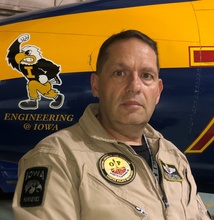
"The combination of Ascentus and OPL creates a powerful advantage for Iowa," said Tom "Mach" Schnell, director of OPL and the Iowa Technology Institute and the Captain Jim "Max" Gross Chair in Engineering. "Ascentus helps attract aerospace companies looking for a collaborative environment, while OPL provides the specialized research and flight-test infrastructure needed to help those companies successfully develop and validate their technologies."
Schnell said OPL's value extends beyond its facilities and aircraft.
"We work closely with companies to identify challenges, refine technologies, and help move innovation from concept to operational reality,” he said. “That expertise is a significant asset for organizations considering Iowa as a place to invest and grow."
Being able to get hands on experience at the Operator Performance Laboratory was invaluable in progressing my knowledge and expertise in aerospace engineering, which in turn has helped me in my career. There are very few Universities in the US that offer that type of hands on experience with live aircraft, being able to work on relevant use cases for applied research.
Wenger sees potential for Ascentus to strengthen connections among aerospace companies statewide, creating the kind of collaborative environment found in established aerospace centers such as Huntsville, Alabama, and Raleigh, North Carolina.
"When companies are located near each other, they collaborate more easily, share ideas, and create more opportunities for professionals," Wenger said. "That benefits businesses, but it also benefits employees because they can grow their careers without leaving the region."

Amy Dideriksen, now a senior research manager at Collins Aerospace in Cedar Rapids, earned a PhD under Schnell's tutelage.
"Being able to get hands on experience at the OPL was invaluable in progressing my knowledge and expertise in aerospace engineering, which in turn has helped me in my career," Dideriksen said. "There are very few universities in the U.S. that offer that type of hands on experience with live aircraft, being able to work on relevant use cases for applied research."
As aerospace technologies grow more sophisticated with advances in artificial intelligence, autonomy, sensing, and human-machine teaming, the need for realistic testing environments and skilled engineers continues to grow. OPL gives companies access to both.
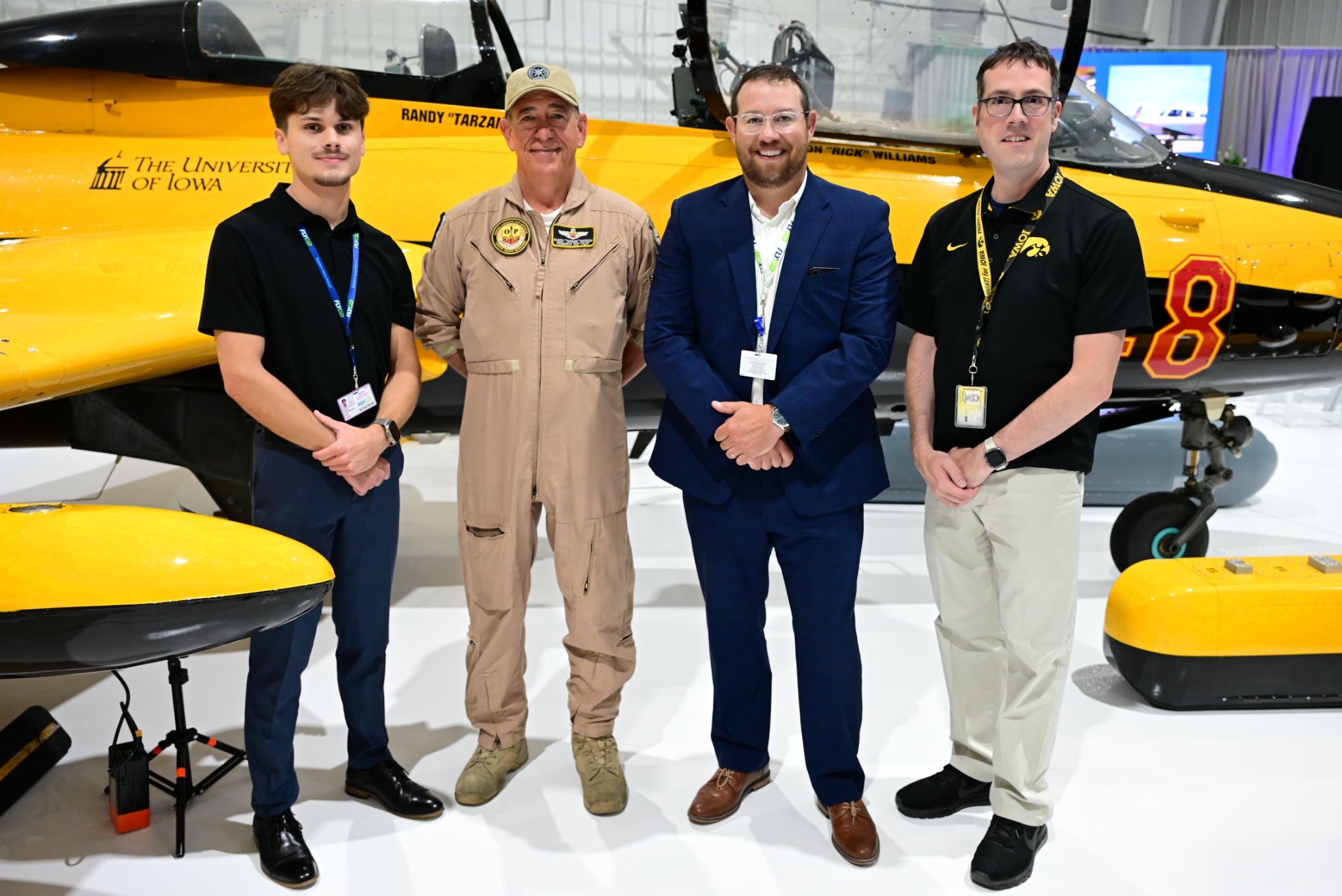
OPL represented UI at the June 24 Ascentus brand unveiling during the Eastern Iowa Airport's State of the Airport address and will participate in the Farnborough International Airshow in July.