Investments in new equipment have allowed electrical and computer engineering students to gain hands-on experience with cutting edge technology at the University of Iowa College of Engineering.
External partners contributed approximately $160,000 for state-of-the-art radio frequency and electromagnetic equipment, updated lab and classroom space, and innovative new coursework that prepares students for a variety of career paths.
“Our goal is to demystify cutting-edge technology,” said Anton Kruger, professor of electrical and computer engineering, who secured contributions including $20,000 from the Iowa Space Grant Consortium, $20,000 from NASA, and $120,000 from the Roy J. Carver Charitable Trust.
A highlight of the investments have been the ability to introduce new classes, Principles and Applications of LiDAR and Principles and Applications of Radar. LiDAR, or Light Detection and Ranging, is an active remote-sensing technology that uses laser pulses to measure precise distances and create detailed 3D models of objects and landscapes.
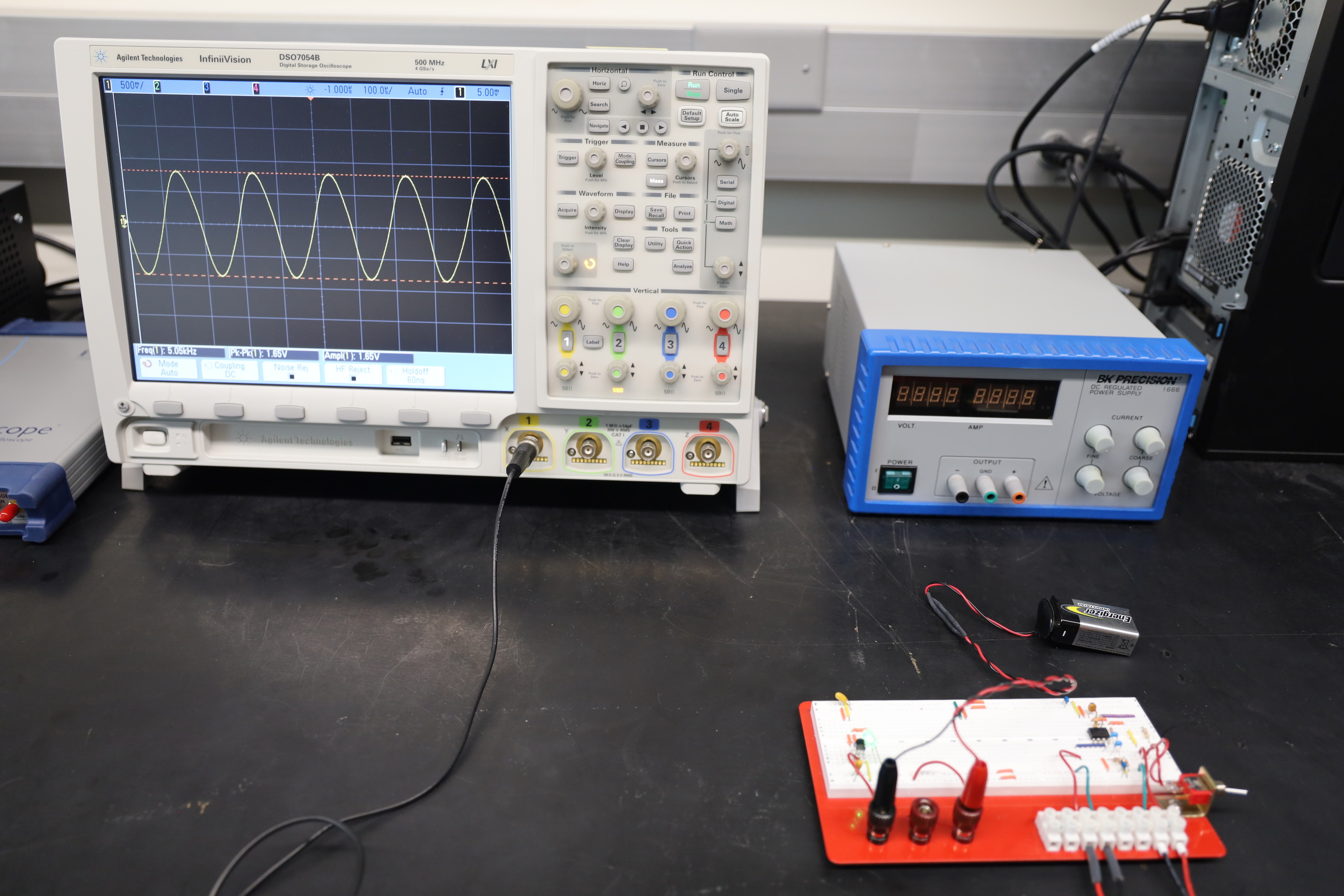
Hardware and software upgrades to a signal analyzer extend its capability to the lower millimeter wave band, which support technologies central to modern life, such as 5G cellphones, automotive collision-avoidance radar, airport security scanners, and precision location devices like Apple AirTags. A sampling oscilloscope allows observations of very short pulses, which are common in radar and LiDAR systems.
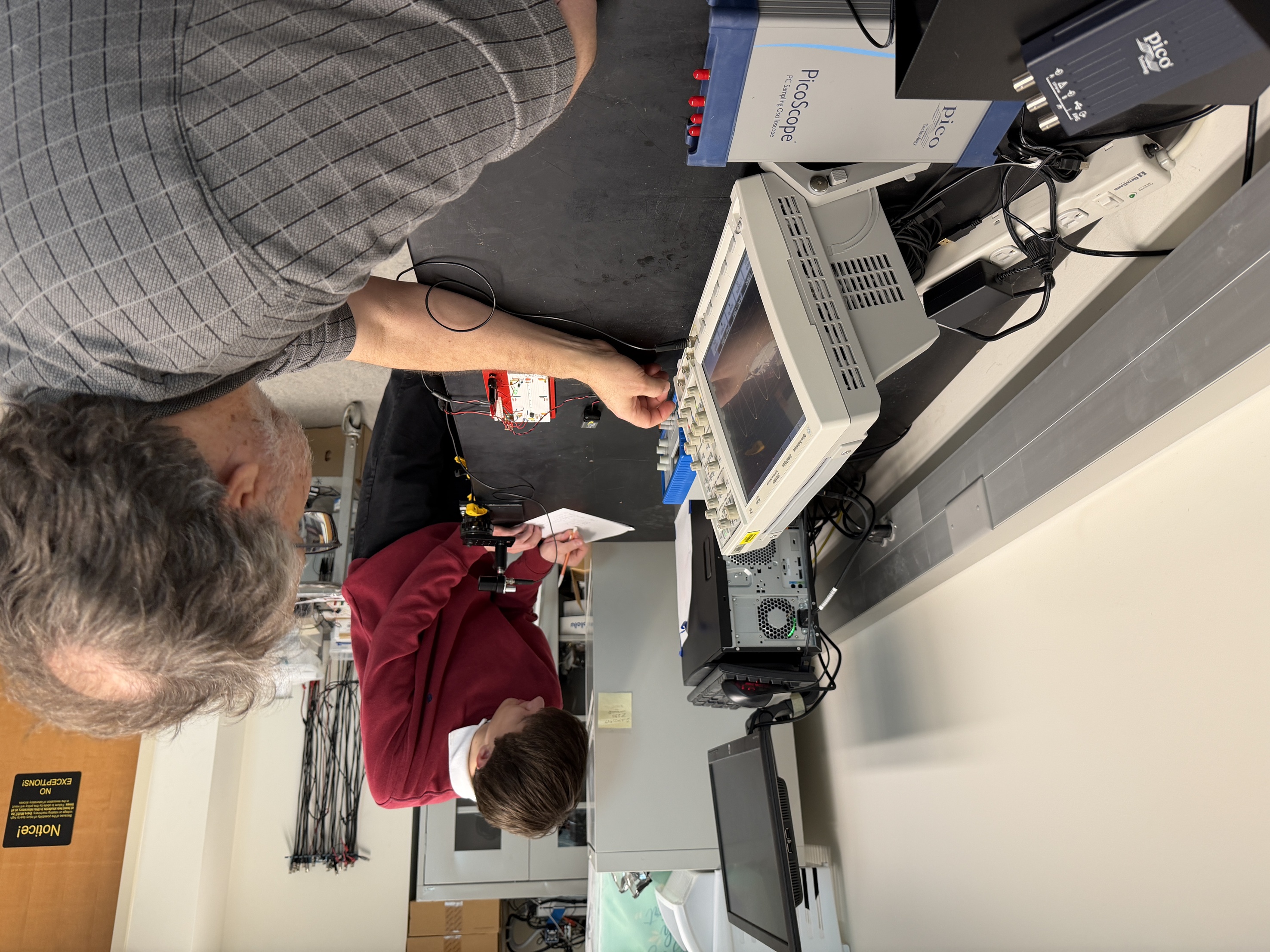
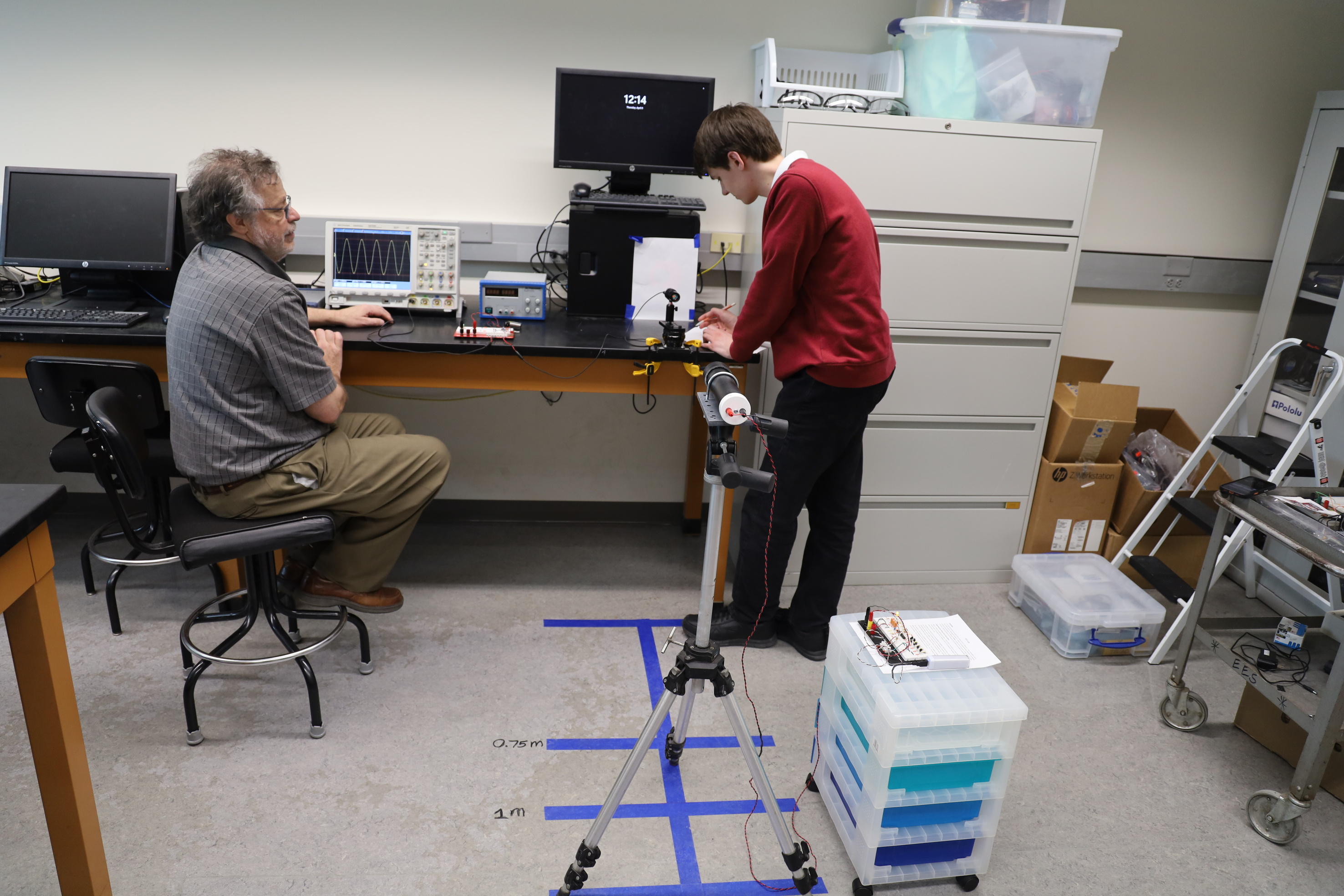
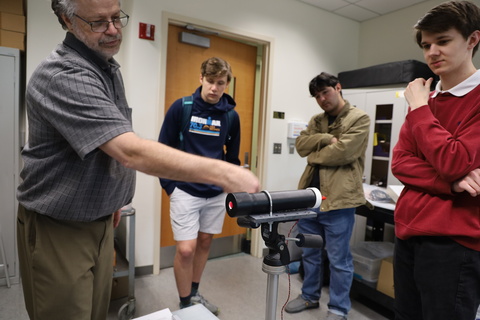
In class, students practice fundamental LiDAR concepts, process signals, and analyze sample data required to take atmospheric measurements, like instruments used on the International Space Station.
“We are trying to determine from experimentation what the field of view is and how it impacts the amplitude of the signal from the transmitter,” Joel Dillman, a fourth-year electrical engineering student from Cedar Rapids, said in explaining one minilab in the LiDAR course.
The experiment gives students practice validating the accuracy of LiDAR data, connecting theory with application.
The course is one of a variety of upgrades to student experience in ECE.
Teaching labs have improved electrical systems and modern lab benches for electronics and circuits instruction. A 48-port, 10-gigabit Ethernet switch was installed in the department to provide high-speed connectivity essential for medical imaging, artificial intelligence, and data-intensive research.
“Some of the most transformative technology is the kind you never see,” said Gary Christensen, ECE DEO and professor who has made student experience a focal point “Investments in high-speed data infrastructure and advanced lab equipment change what our students and researchers are able to do.”