
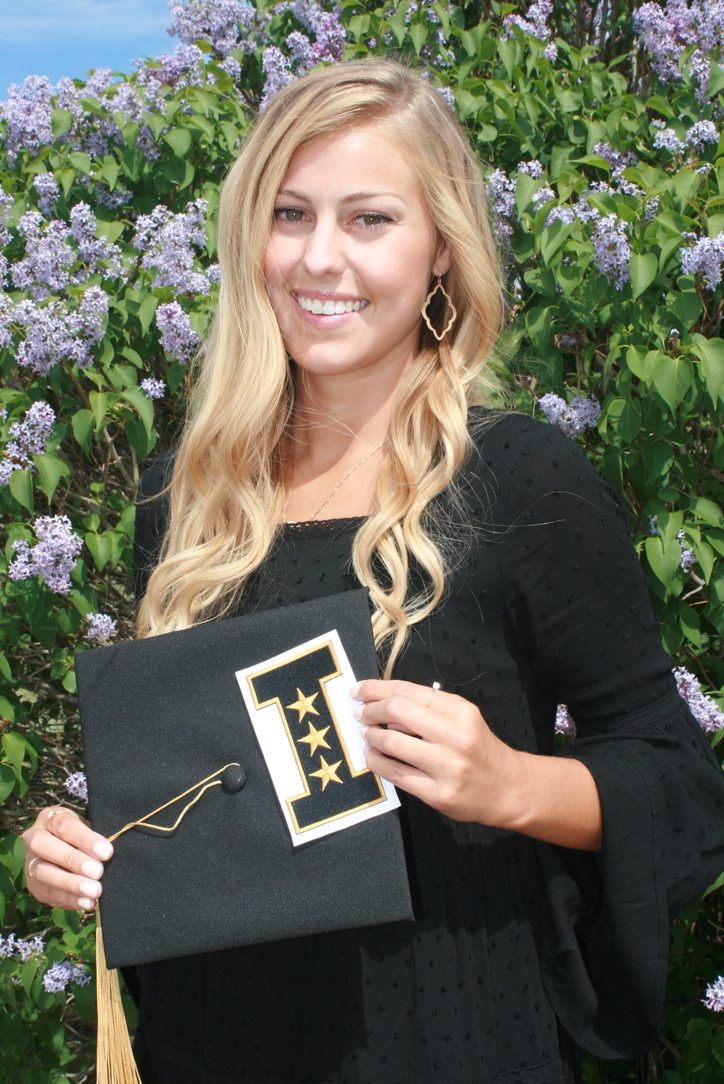
Written by Jazmine Lopez
The legacy of a 2021 University of Iowa biomedical engineering graduate who lost her life prematurely four years ago will live on through a scholarship honoring her passion for biomedical engineering and her commitment to serving others.
Molly Anne Corlett died at age 23 in 2022 as the result of a rupture of a previously undetectable and asymptomatic Arteriovenous Malformation (AVM) in her brain. Despite her death, she continues to shape people not only as researchers and students, but as individuals.
Today, her legacy lives on through the Molly Anne Corlett Memorial Scholarship. For her family, the scholarship was a way for them to transform grief into purpose.
“We’ve tried to take a tragedy and turn it into a triumph,” Molly’s mother said. “Take this darkness and turn it into light for others and bring light into the world. In her name, she was such a light, and we are trying to carry her legacy forward.”
Raised to value hard work and learning, Molly grew up understanding that while she didn't have to be the best, she did have to give her best effort.
The scholarship reflects that same philosophy. It supports students who demonstrate academic excellence, along with empathy, service, and a commitment to using their gifts to improve the lives of others. It is more than financial help. It's a way to give opportunity to future engineers to think about what they’ll do with their gifts and how they'll pay it forward.
The scholarship is part of a broader effort through Molly’s Miracles Foundation, created by her family to continue the work she cared deeply about supporting education, service, and opportunities for young people.
Growing up in Colorado
Molly grew up in Colorado, where she spent her childhood and high school years. She had additional ties to Iowa through her family and later her education. Molly’s family established scholarships at Middle Park High School in the Colorado mountains, Chaparral High School in Parker, Colorado, and MFL MarMac High School in northeast Iowa.
Each place shaped Molly’s life and reflects the communities she loved, her family said. Each scholarship shares the same mission to encourage young individuals to bring light into the world through kindness, service, and education as an extension of who Molly was.
Before the memorial scholarships were created, Molly’s impact was already being recognized.
At Chaparral High School, where Molly served in student government and was deeply involved in athletics and service, her leadership and dedication left such a strong impression that an award was created in her name while she was still a high school student. The Molly Corlett Award recognizes an individual who shows exceptional commitment and dedication.
Molly became the first recipient.
Choosing Iowa
When it came to choosing a college, Molly had scholarship opportunities in Colorado, but she also felt a strong to Iowa. Her father, John Corlett, an Iowa alum, would bring the family to Iowa for Hawkeye football games, basketball games, and to visit relatives.
From an early age, Molly proudly called herself a “Hawkeye.”
Those trips left a lasting impression, even inspiring her to begin spelling “Hawk Guys” as a young child.
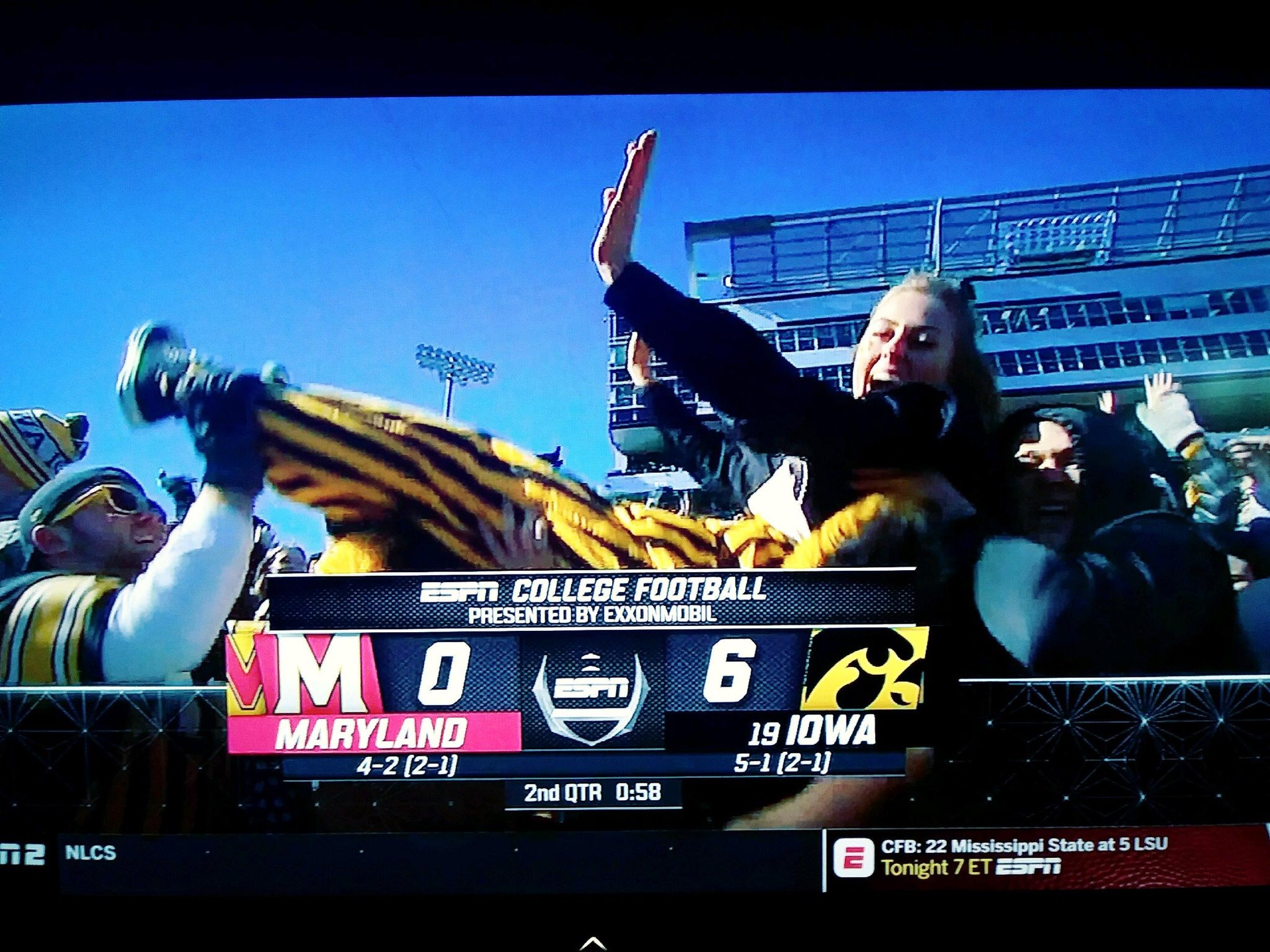
Despite strong offers back home in Colorado, Molly chose Iowa Engineering. At Iowa, Molly rarely missed a Hawkeye home football game and became known among friends for showing up early and cheering loudly from the front rows of the student section. Her parents often spotted her on ESPN broadcasts during games.
The energy she brought to game days was the same energy she brought to friendships, volunteering, studying, and cheering on the people around her even if she didn't know them.
Even after a full day of game day excitement, Molly would often head back to the library or her apartment to study, preparing for the coursework of biomedical engineering. While many students treated football Saturdays as a break from schoolwork, Molly found a way to do both.
Setting the curve
Academically, Molly participated in Iowa’s U2G program, allowing her to complete her bachelor’s and master’s degrees in biomedical engineering in just five years, graduating with highest distinction. She never earned less than an A, yet few people knew that at the time.
Not until graduation did many of her classmates realize Molly had consistently set the curve on exams. Her professors saw that same dedication and encouraged her to continue building on her work.
“Molly is and was sunshine. She is and was the blueprint in how to be both a leader and a servant, simultaneously boldly stepping into her purpose and excelling at it without any praise in return,” shared Molly’s friend, Karina.
Molly contributed to published research in the National Library of Medicine and became a trusted, dependable member of the team. She focused on gait analysis and prosthetics in Dr.Jason Wilken’s research lab and was recognized not only for her technical skills but also for her positive presence.
St. Mary’s Hospital benefited from Molly’s weekly volunteerism, and classmates benefited from tutoring. Family would later discover Molly had been helping her apartment's custodian practice English. She donated more than 30 inches of her hair before the age of 15 and spent a summer volunteering at Adam’s Camp while maintaining connections with campers and their families for years afterward.
Giving back
In every space she entered, she treated professors, peers, hospital staff members, and production works alike with the same genuine respect.
“Even on her worst days, she believed she could be a blessing to others,” Molly’s father said.
After graduation from Iowa, Molly began her professional career at Penumbra, Inc. in California developing medical devices designed to treat brain aneurysms. She loved her work, and often told her parents “I was born to do this."
At Penumbra, she served as an engineer overseeing a production line, yet she never referred to the individuals on that line as employees but as colleagues. Through that kindness, they built genuine friendships, sharing lunches and celebrating milestones together.
When Molly unexpectedly passed, many of those same colleagues lined up outside the hospital to support her family. In a heartbreaking irony, Molly had been helping develop devices to treat vascular conditions in the brain.
After her death she continued to give as an organ donor, saving five lives. For her family, the loss was unimaginable but so was their desire and determination to carry forward the light she brought into the world.
To learn more about Molly’s life, visit mollysmiracles.org.