Learn about University of Iowa undergraduate engineering majors, minors, and certificates and find the program that’s right for you.
Undergraduate majors
Biomedical Engineering

Biomedical engineers link biology, medicine, and engineering to improve human health. They may work closely with medical doctors to design and evaluate prosthetic devices (e.g., heart valves, spinal and hip implants); work with computer analysis of medical images; work with new materials for implants and tissue-engineered implants; and use computers to analyze genetic structures and functions. This major is commonly used as a route to medical school. The Department of Biomedical Engineering fosters interdisciplinary activities across departments and colleges and maintains strong ties with the Carver College of Medicine.
Each student prior to completing their second year will need to choose a focus area that best fits their goals for their degree.
Chemical Engineering

Chemical engineers use the industrial application of chemicals to make or improve the world around us. They use microbes to produce pharmaceuticals and chemicals; develop new sources of energy; create artificial organs; and design the next generation of polymers. They construct synthetic fibers to make clothes more comfortable, develop methods to mass-produce drugs, making them more affordable, and create safer, more efficient methods of refining petroleum products, making energy more productive and cost effective.
Each student prior to completing their second year will need to choose a focus area that best fits their goals for their degree.
- Sample four-year plan (click on General 4-year Plan)
- Focus areas
- Plan of study submission form
Civil Engineering

Civil and environmental engineers work with technology, people, and nature in designing and managing essential elements of society’s infrastructure such as highways, bridges, buildings, tunnels, dams, and water-supply systems. They also devise environmentally friendly ways to manage and process society's waste, destroy toxic substances, remove pollutants from the water or the air; and ensure the sustainable well-being of the built and natural environments.
Each student prior to completing their second year will need to choose a focus area that best fits their goals for their degree.
Computer Engineering

Computer engineering combines the best of electrical engineering and computer science to design and build the systems that power our digital world. From smartphones and smart homes to self-driving cars and artificial intelligence, computer engineers create the hardware and software that make modern technology possible.
Students in the computer engineering program learn how computers work from the ground up, i.e., from circuits and microprocessors to high-performance computer architecture, software systems, and machine learning. They gain hands-on experience designing electronic systems, programming embedded devices, and developing intelligent systems that sense, think, and respond to their environment.
In their senior year, students complete a two-semester capstone design sequence culminating in a significant, original project.
Computer Science and Engineering
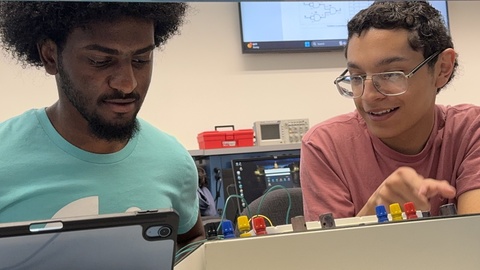
Computer and electrical engineers work at the core of many technologies we take for granted including: electrical power, wireless communication, consumer electronics, digital computing, computer software, computer networks, electronic databases, automatic controls, medical imaging, remote sensing, and the miniature devices that make all of these technologies possible.
Electrical engineers find employment in all of these areas and, more generally, anywhere smart technology is employed. They consistently rank among the most sought after, and highest paid, technology professionals. Electrical engineering is also an excellent starting point for further study in medicine, law, and business.
Electrical Engineering
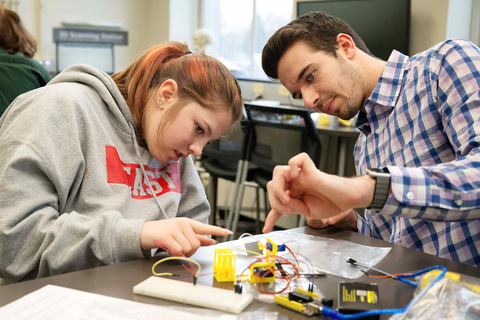
Electrical engineers work at the core of many technologies we take for granted including: electrical power, wireless communication, consumer electronics, digital computing, computer software, computer networks, electronic databases, automatic controls, medical imaging, remote sensing, and the miniature devices that make all of these technologies possible.
Electrical engineers find employment in all of these areas and, more generally, anywhere smart technology is employed. They consistently rank among the most sought after, and highest paid, technology professionals. Electrical engineering is also an excellent starting point for further study in medicine, law, and business.
Environmental Engineering

Civil and environmental engineers work with technology, people, and nature in designing and managing essential elements of society’s infrastructure such as highways, bridges, buildings, tunnels, dams, and water-supply systems. They also devise environmentally friendly ways to manage and process society's waste, destroy toxic substances, remove pollutants from the water or the air; and ensure the sustainable well-being of the built and natural environments.
Each student prior to completing their second year will need to choose a focus area that best fits their goals for their degree.
Industrial Engineering
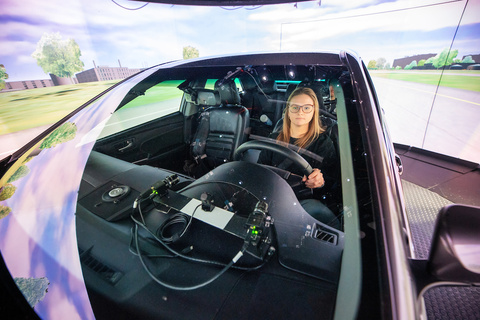
Industrial engineers organize the people, information, energy, materials, and machines involved in the production process, focusing on plant design and management, quality control, and the human factors of engineering, e.g. how humans can best interact with technology. Industrial engineers may use integrated design and manufacturing techniques to renovate the production systems of a Fortune 500 company; develop data-mining tools to analyze and optimize patient care in a major hospital; assess driver distraction due to cell phone use in automobiles and develop safer driver assistance systems.
Each student prior to completing their second year will need to choose a focus area that best fits their goals for their degree.
Mechanical Engineering

Mechanical engineers use energy principles and mechanics to design machines such as engines and motors. Mechanical engineers work in the areas of automotive, robotics, manufacturing, and in the design of machines. They may develop robots for space exploration; use a computer to simulate freezing of human cells; improve devices to utilize alternative energy sources, such as fuel cells, wind turbines, and solar energy converters.
Undeclared
Students can join the College of Engineering as Undeclared Engineering. The sample plan for Undeclared Engineering only provides suggested coursework for the first three semesters since requirements begin to vary more in the third semester and beyond. Students are encouraged to declare their major before taking coursework in the third semester on the sample plan to ensure progress toward completion of their declared degree.
Minors and certificates
Many minors or certificates can be earned using your focus area or general education classes. While the sections below provide some suggestions, they are not meant to be a complete list. Students should check the University Catalog and the department for exact details of completing any minor or certificate, and with their faculty advisor about how their credits will count toward your degree program.
Most minors allow only up to 3 s.h. (if any) of transfer credit and require a minimum 2.0 GPA in all minor classes.
Course prerequisites are not always applicable to a minor. Always check with the department for full requirements of earning a minor.
Engineering minors
- Artificial Intelligence: Theory, Methods, and Applications (15 s.h.)
- Electrical Engineering (15 s.h.)
- Environmental Engineering (15 s.h.)
- Human Systems Engineering (15 s.h.)
- Industrial and Systems Engineering (15 s.h.)
Other common minors
To see if you can earn a minor while completing your focus area, please speak with your faculty advisor. Always see the University Catalog for full details of minor.
- Biology (15 s.h. required for minor)
- Business Administration (36 s.h. required for minor)
- Chemistry (15 s.h. required for minor)
- Computer Science (17 s.h. required for minor)
- Earth and Environmental Sciences (15 s.h. required for minor)
- Human Physiology (15 s.h. required for minor)
- Informatics (16 s.h. required for min
- Mathematics (15 s.h. required for minor)
- Physics (15 s.h. required for minor)
- Statistics (15 s.h. required for minor)
Common certificates
To see if you can earn a certificate while completing your focus area, please speak with your faculty advisor. Always see the University Catalog for full details of certificate.
- Artificial Intelligence, Modeling and Simulation in Engineering Certificate (18 s.h. required for certificate)
- Certificate in Applied Climate Science and Energy Technologies (18 s.h. required for certificate)
- Naval Science and Technology Certificate (18 s.h. required for certificate)
- Sustainability (24 s.h. required for certificate)
- Technological Entrepreneurship Certificate (18 s.h. required for certificate)
Undergraduate-to-Graduate (U2G) Programs
Combine your undergraduate and graduate courses to get your graduate degree faster.