
In response to Iowans’ urgent concerns about the state’s rising cancer rates, a new UI research program is growing our understanding of how environmental exposures affect human health.
Written by Jacqueline Hartling Stolze
More than once, David Cwiertny has overheard students in his University of Iowa engineering classes say, “I don’t feel like I can stay in Iowa. If I do, I’ll get cancer.”
“That’s just not acceptable,” said Cwiertny, the Rose and Joseph Summers Chair in Water Resources Engineering and an IIHR research engineer. “We can’t have our students feeling like they don’t have a future here.”
Iowa’s troubling health trends make those fears understandable. The state is one of only a few where cancer rates continue to rise and currently ranks second highest in the nation. Addressing this crisis requires a deeper understanding of how environmental factors affect human health.
To meet that need, the University of Iowa has launched the Iowa Integrated Network for Science, Information, and Geospatial Health Tracking (Iowa INSIGHT), a statewide research initiative. Backed by a $5 million founding gift from Sharon and Kyle Krause and an additional $1 million from the Roy J. Carver Charitable Trust, Iowa INSIGHT brings together the Center for Health Effects of Environmental Contamination (CHEEC) and IIHR—Hydroscience and Engineering.
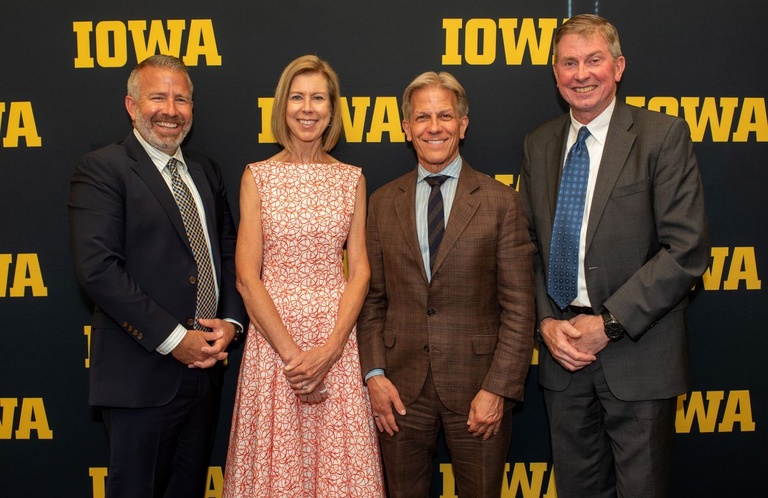
Iowa INSIGHT builds on the university’s expertise in environmental monitoring and analysis to close critical data gaps and generate science-based insights that can guide solutions, ultimately strengthening the health and resiliency of Iowans and their environment.
For Sharon Krause, the effort is deeply personal. Her long-standing interest in water quality and conservation, combined with conversations with IIHR Director Larry Weber through their shared work with The Nature Conservancy, led her to conclude that Iowa faces a broader environmental crisis affecting human health.
Rather than waiting for an opportunity to give, Krause helped create one.
“That’s why we’re proud to partner with the University of Iowa to unlock critical research that will pave the way for solutions to address the health and well-being of both the environment and the people of Iowa,” Krause said.
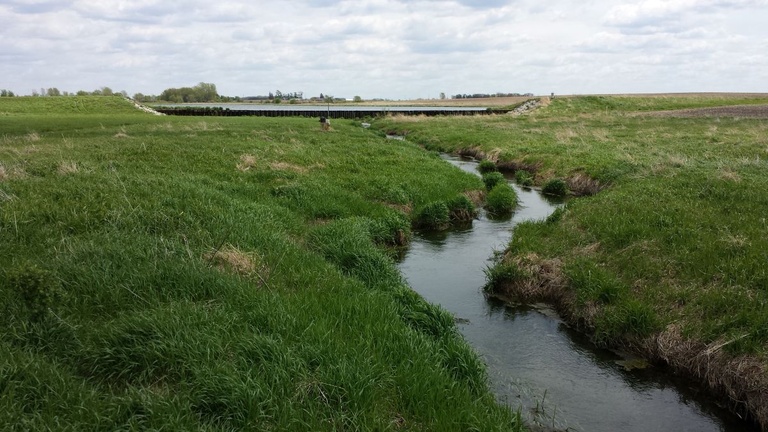
Cwiertny, who leads the initiative and directs CHEEC, studies watersheds and the movement of pollutants such as pesticides and “forever chemicals.” Iowa’s unique vulnerabilities demand a more complete understanding, he said.
Iowa INSIGHT researchers are focusing on four key areas:
Environmental monitoring
Leveraging and growing existing environmental monitoring of Iowa’s air and water while expanding analyses to assess risks from emerging threats
Biomonitoring
Building expertise and infrastructure to measure environmental chemicals in human tissues or fluids, generating data needed to link environmental exposures and health outcomes
Epidemiology and data science
Establishing associations between environmental exposures and adverse health outcomes, especially cancers, to potentially power future solutions and innovations
Knowledge sharing
Raising awareness and motivating action among Iowans by making environmental and health data accessible
Cwiertny and Weber both feel a sense of urgency to share the results with Iowans. Traditional academic timelines, Cwiertny said, are too slow for urgent health concerns.
“Our first responsibility is getting the information out to the public,” Cwiertny said.
To do that, Iowa INSIGHT is developing accessible data dashboards, clear fact sheets, and media stories, along with partnerships with local public health officials. The team plans to host public meetings in all 99 counties to share results and answer questions.
“We’re doing this for the people of Iowa — rural, urban, small town, big town, northeast, southwest — wherever you live, and whatever your livelihood,” Weber said.
For Cwiertny, the work is about listening as well as research. Iowans should feel that they’ve been heard — that their fears, concerns, and experiences are not being ignored, he said.