
By Payton Spindler
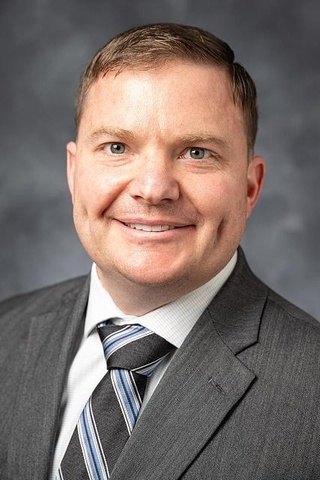
At 22, Patrick Link joined the military, unaware that the path would eventually lead to running a research lab here at the University of Iowa.
Unsure about the future and questioning college trajectories, Link enlisted in the U.S. Army at the urging of a friend, with the goal of determining whether becoming a physician was the right fit. Link, who joined the College of Engineering as an assistant professor of biomedical engineering this year with support from the Carver Charitable Trust, began solving health challenges through military service.
Link completed the Special Forces Medical Sergeant Course, known for having one of the highest attrition rates of any military school, and became a Green Beret — among the most elite, highly trained members of the U.S. military.
Deployments across Asia as a Special Forces Medical Sergeant involved providing medical, surgical, and veterinary care to underserved communities. Stationed in countries including the Philippines, Bangladesh, Nepal, and Afghanistan, Link established daily clinics to treat local populations and took on additional responsibilities as the team engineer, overseeing the development of schools, wells, roads, and outreach programs.
“I wouldn’t trade the experiences for anything in the world, and I wouldn’t do them again for anything in the world,” Link said.
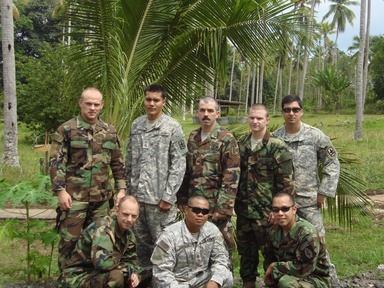
Link discovered that being a medical care provider wasn’t the right fit, but the experience sparked a lasting desire to improve health outcomes for people around the world.
While individual patient care proved rewarding, the broader impact of community-level problem-solving became more compelling. Working in austere environments required ingenuity — repurposing equipment, developing novel solutions, and identifying needs and available resources to improve lives. These experiences laid the foundation for a future in biomedical engineering.
Link brings a global perspective to the Roy J. Carver Department of Biomedical Engineering, where his research lab focuses on how the body heals, or fails to heal, after injury or disease.
After leaving the military in 2012, Link earned degrees in emergency medical care and biology at Western Carolina University, where research began on how certain proteins help cells recover from low oxygen conditions. That work led to a master’s and PhD at Virginia Commonwealth University, with a focus on mechanobiology: the study of how physical forces like stretching or stiffness affect cell behavior.
“I was able to develop a portfolio of how the mechanical environment and the extracellular environment work together to allow our tissues to function properly,” Link explained. Research explored how changes in the extracellular matrix, a network of proteins and molecules surrounding cells, combined with mechanical stress, influence the growth of new blood vessels and tissue repair.
As a postdoctoral researcher at the Mayo Clinic, Link’s research expanded to include redox biology, which examines how the movement of electrons within cells affects their function. “I became interested in understanding how redox, or how changes in where electrons go within cells, influence what those cells do,” Link said. These changes are especially important in diseases involving scarring or fibrosis, where tissues break down or rebuild abnormally.
This work earned support from the National Institutes of Health, the American Lung Association, Boehringer Ingelheim, and the United States Department of Defense. At Iowa, the research program will continue exploring how these cellular processes can be targeted to treat diseases like pulmonary fibrosis, where scar tissue builds up in the lungs and makes breathing difficult.
“I hope to develop novel therapeutic strategies to allow our bodies to recover from progressive fibrotic type diseases,” Link said. “I want to understand how we can break down excess scar tissue in things like our lungs.”
The University of Iowa’s strong research programs in lung biology and redox science were a major draw. “The lung research environment here is phenomenal,” Link said. “Also, the redox research base… is one of a handful of programs around the country, and its reputation is just amazing.” Building strong collaborations across campus will be a key part of the work ahead.
The path to biomedical engineering wasn’t straightforward. “Ultimately, it took me trying a lot of things before I figured out what I wanted to do,” Link reflected. “That really allowed me to solidify and know exactly what I wanted to do.” With a foundation built on service and a research focus shaped by real-world experience, Link brings a unique perspective to the department and to the future of healing-focused innovation.