
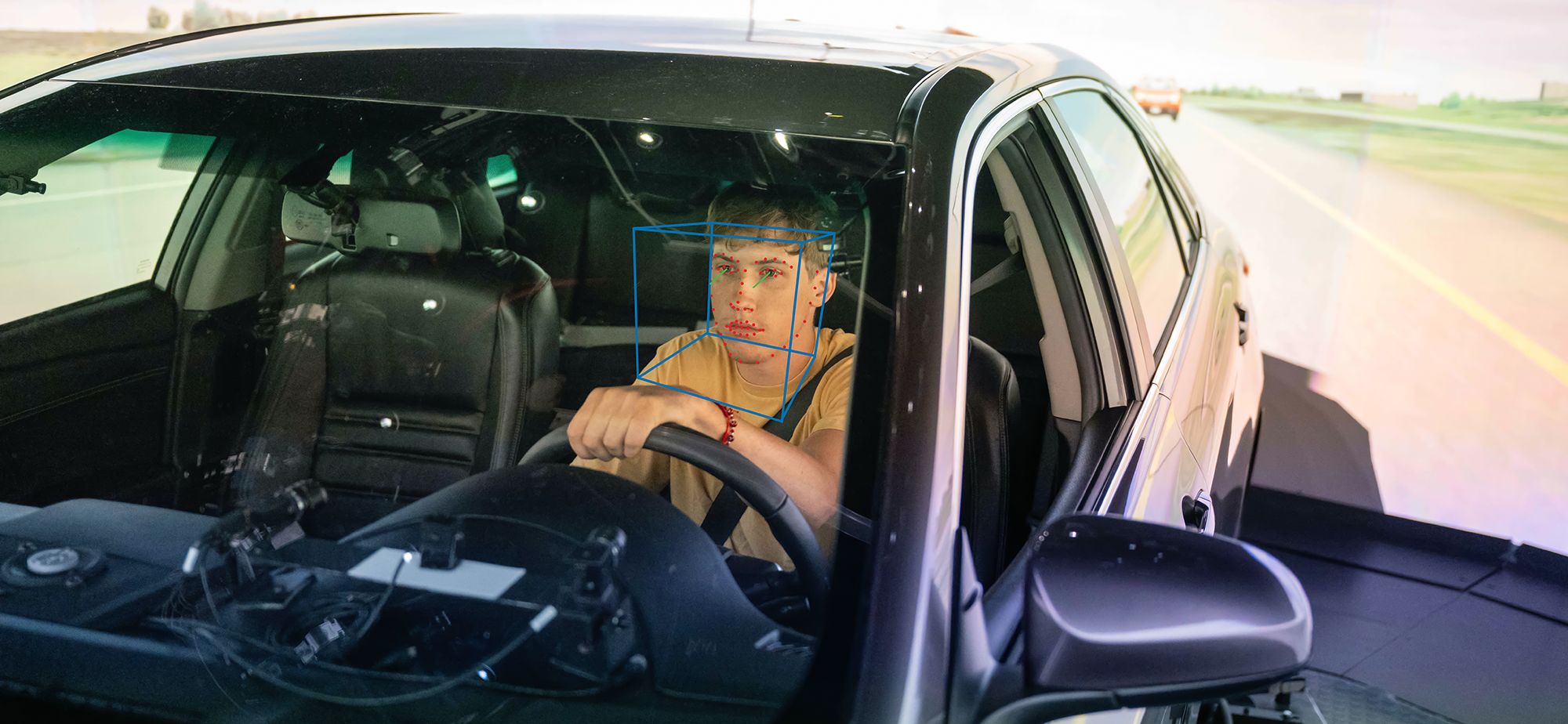
Driver monitoring systems use eye tracking, head movements, and points on the face to detect behaviors such as yawning for drowsiness detection.
DSRI is at the forefront of advancing the next generation of driver monitoring systems.
The University of Iowa Driving Safety Research Institute (DSRI) is leading multiple projects assessing the latest evolutions in driver monitoring systems (DMS) that are designed to identify when motorists are distracted, drowsy, and/or under the influence of alcohol or cannabis.
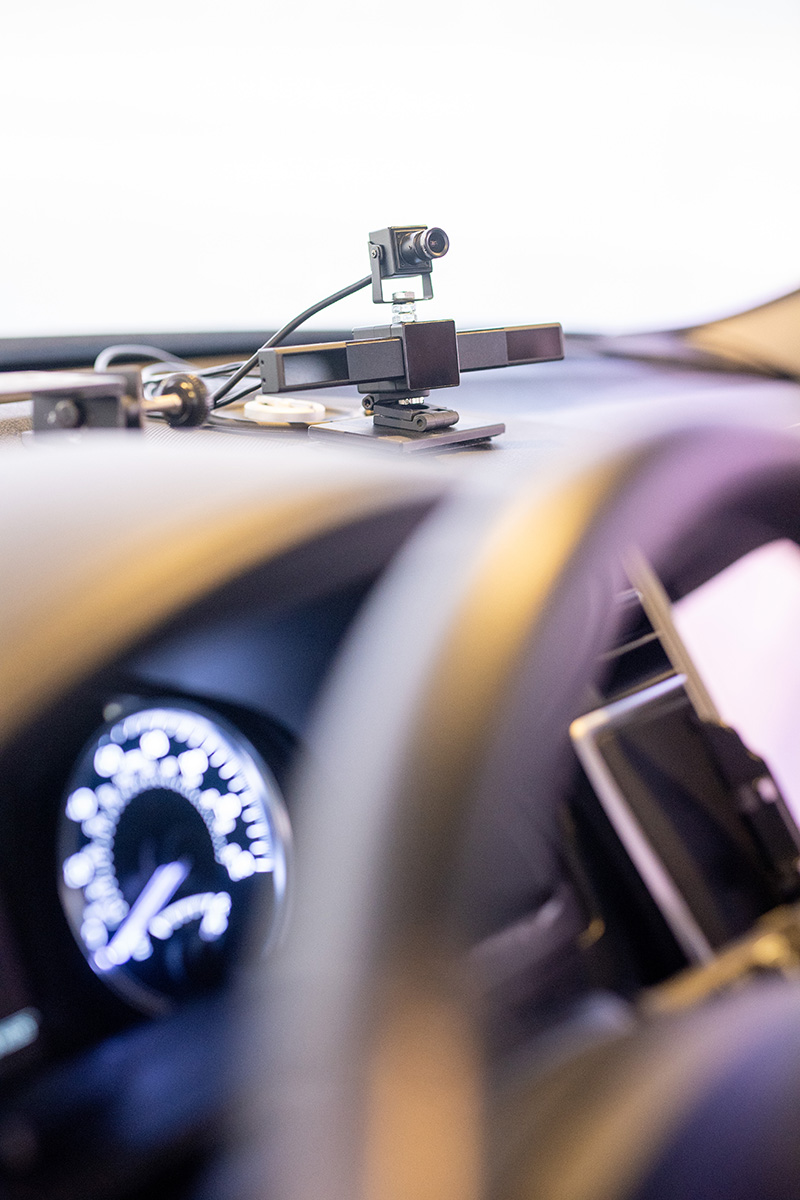
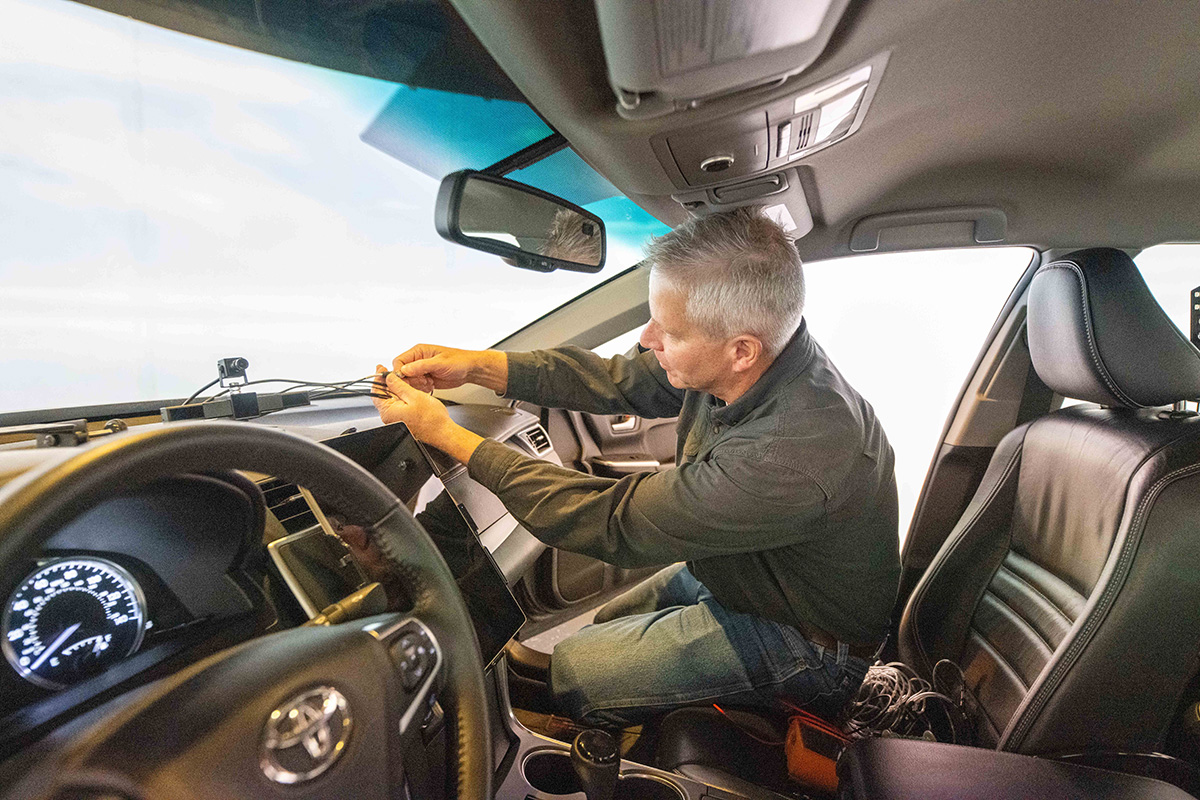
Various types of DMS can be found on new vehicles today. A camera inside the vehicle tracks eye and head movement to assess driver drowsiness or distraction. An alert then urges the driver to take a break or keep their eyes on the road. DMS technology is evolving to also detect driver impairment from drugs or alcohol.
Being able to distinguish among factors affecting the driver is a key step in improving the technology. DSRI has been a leader in assessing which measures are most sensitive in differentiating the type of impairment.
Alcohol
Under a $2 million grant from the National Highway Traffic Safety Administration (NHTSA), DSRI is studying the effectiveness of DMS to detect if someone is driving while drunk — specifically if they are over the legal limit or not.
Study participants will drive in a driving simulator at four distinct times: 1) when they are alert and sober, 2) when they are drowsy and sober, 3) when their blood alcohol content (BAC) is at 0.08, and 4) again when their BAC is at 0.12. Investigators will collect data on driver performance, eye tracking, head and body movements, heart rate, and respiration, among others.
“This study is significant because its results could be used in the future to help prevent or reduce the number of alcohol-related crashes,” said Tim Brown, director of drugged driving research.
Distraction and drowsiness
DSRI is using DMS to detect if a driver is distracted and identify when this occurs alongside drowsiness. This research will help differentiate between distraction and drowsiness, enabling researchers to understand the effects of distraction with and without the presence of drowsiness.
DSRI is conducting research to provide recommendations for test procedures to evaluate DMS systems that are designed to detect drowsiness. In collaboration with Exponent, they developed a protocol to gather data on drowsy drivers and are evaluating it through DSRI’s driving simulator and Exponent’s test track.
Cannabis
Using a Seeing Machines DMS to study changes in eye behaviors after cannabis use, DSRI researchers found changes in scanning patterns of cannabis users before and after consumption. Additionally, changes in average eye opening were found to decrease following use.
Alcohol detection
Researchers examined different eye-related measures (e.g., blink rate, pupil size) to assess: 1) if the driver recently used alcohol, and 2) if these measures are consistent across users relative to BAC levels. Findings showed that median eye opening and percentage of time spent focused on the forward roadway could be used as predictors of alcohol-impaired driving.
Third-party collaboration
The DSRI team detected and analyzed impairment from alcohol and cannabis using a DMS provided by Aisin, a global automotive supplier. One of the models they tested — which used both vehicle data and facial features — was found to be effective at classifying alcohol impairment. Another model meant to detect cannabis impairment — which used mostly eye features — showed promise, but researchers suspected those results may not hold up to further testing.