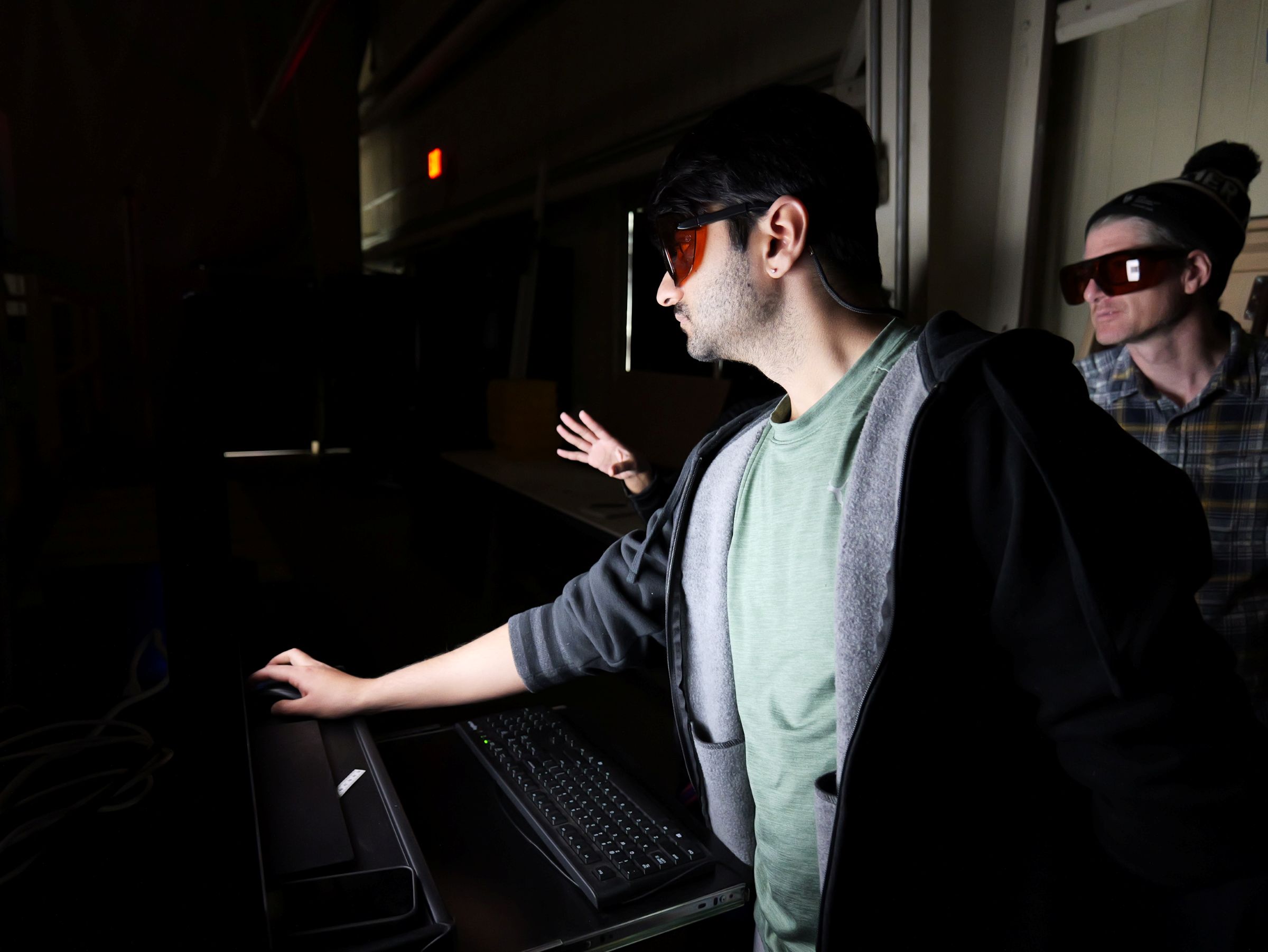
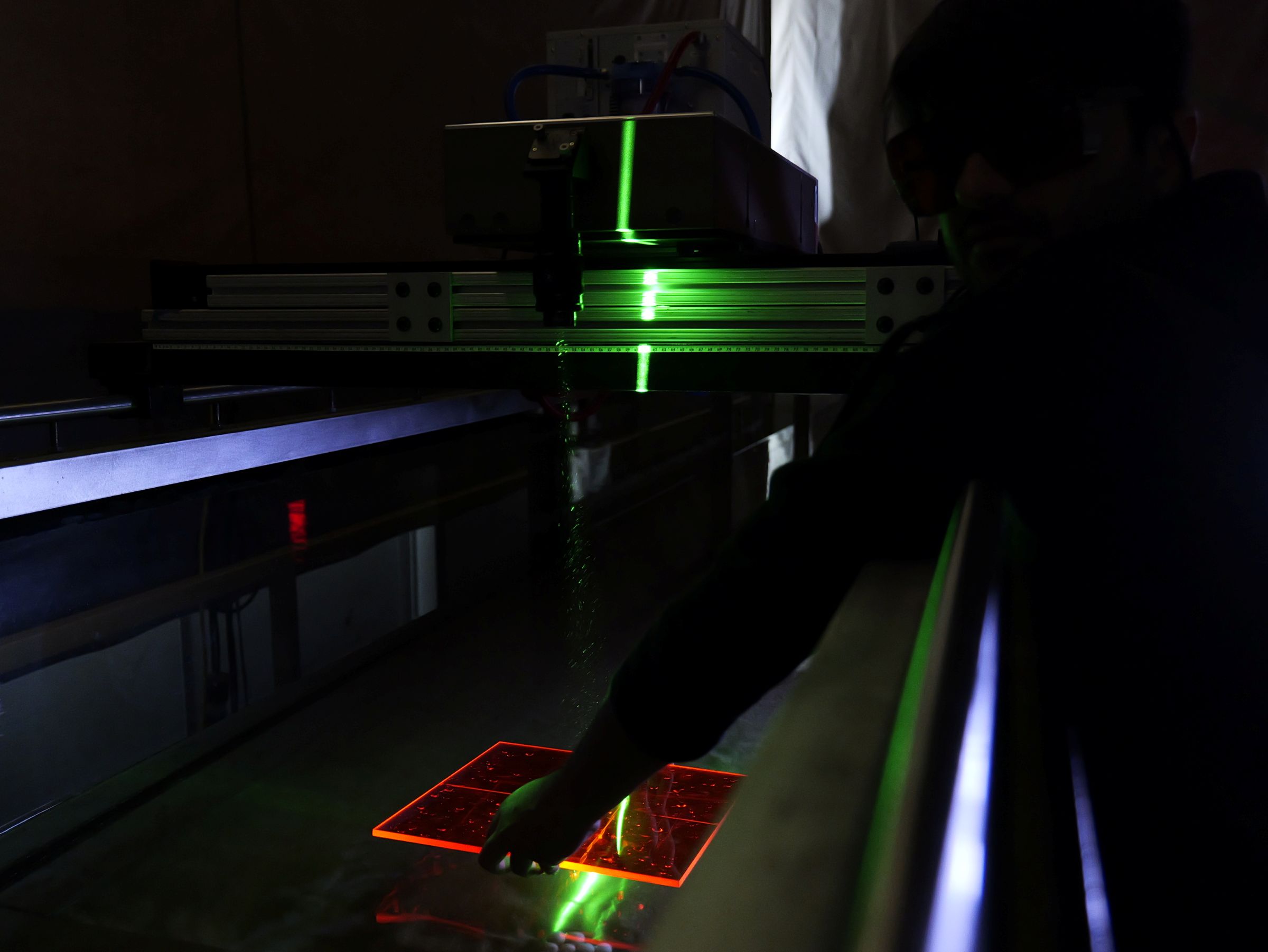
Prof. Priscilla Williams simulates river flow in hopes of mitigating pier scour.
Research by a University of Iowa engineering professor aims to mitigate the negative effects of powerful river flow, which can lead to bridge collapse and other destructive impacts.
Priscilla Williams, assistant professor of civil and environmental engineering and a researcher at IIHR— Hydroscience and Engineering, studies how river flow interacts with impediments such as bridge piers, riverbanks, and even miniscule grains of sand. Findings contribute to improved modeling techniques and river management strategies that enhance the safety and sustainability of infrastructure.
“River-related research generally benefits the public from health, environmental, economic, and social perspectives,” said Williams, who joined IIHR in 2021. “We’re focused on securing the essential connections rivers provide from each of these perspectives, with fundamental and applied research.”
Williams was drawn to Iowa by the international reputation of IIHR. After earning a PhD at the University of Windsor in Ontario, Canada, she worked as a postdoctoral researcher on a large-scale physical modeling project under the mentorship of IIHR associate director Troy Lyons and director Larry Weber. The goal was aiding trout passage through the Freeman Diversion on California’s Santa Clara River. Williams transitioned to a faculty role in 2023, embarking on her own research pursuits.
Currently, Williams focuses on pier scour — the erosion that occurs around bridge piers within river channels. This phenomenon can compromise structural stability if not addressed. By examining the physics of the obstructed flow field, Williams’s work can lead to more accurate models and, ultimately, infrastructure that is better equipped to withstand environmental challenges.
Abhishek Ghimire, a PhD student working under Williams, speaks to her qualities as a researcher and mentor. “She has given me freedom to explore my ideas while always stepping in with her important insights whenever I run into a problem, which I have found incredibly helpful,” Ghimire said.
Williams’ dedication to both her research and her students underscores her commitment to advancing the field while fostering the next generation of experts.
"She has given me freedom to explore my ideas while always stepping in with her important insights whenever I run into a problem."